The world woke up to a political earthquake.
Before dawn broke over Caracas, the impossible had already happened. Nicolás Maduro — the unflinching strongman who had ruled Venezuela with iron fists and televised bravado — was gone. Vanished. Captured in a secret U.S. Delta Force operation that unfolded under moonlight and radio silence.
No leaks. No warnings. No negotiations.
By the time Venezuelan state television realized the president was missing, he was already airborne — flown out of his own country under the cover of night and bound for an American airbase. His destination: the United States. His new reality: a defendant, not a dictator.
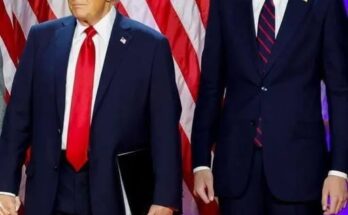
In Washington, the shockwaves hit like thunder. President Donald Trump appeared before cameras at Mar-a-Lago, flanked by former Florida attorney general Pam Bondi, announcing what he called “a historic strike for freedom and justice.” His grin was unmistakable — this was triumph not just over a man, but over years of geopolitical defiance. “The people of Venezuela,” he declared, “are finally free from the grip of narco-terrorism.”
Across the world, allies gasped, adversaries fumed, and diplomats scrambled to understand whether they had just witnessed liberation… or the rebirth of interventionism.
For years, Washington and Caracas had circled each other like opposing storms. Sanctions, oil seizures, and covert blockades had tightened around Maduro’s government. U.S. naval activity in the Caribbean quietly grew — the USS Gerald R. Ford positioned offshore, drone surveillance expanding, and “anti-narcotics operations” blurring the line between law enforcement and war. Still, few imagined the standoff would erupt into open action.
Then, in the dead of night, it did.
Delta Force units, launched from undisclosed locations, struck a secured compound outside Caracas. Explosions shook the outskirts as gunfire echoed through the humid air. By dawn, the mission was complete. Maduro and his wife, Cilia Flores, were in custody — disarmed, disoriented, and surrounded by Americans.
The White House called it “surgical.” Venezuelan state media called it “an act of kidnapping.” Across Latin America, governments held emergency meetings, fearing what might come next. If Washington could remove one head of state in the name of justice, who could claim immunity?
Back home, Venezuela teetered on the edge of collapse. Soldiers loyal to Maduro vanished from their posts. Crowds gathered outside shuttered ministries, unsure who was in charge. Some wept in disbelief; others waved flags and chanted, “¡Libertad!” In the barrios, rumors spread that opposition leader María Corina Machado was preparing to form a provisional government. For the first time in years, the air carried both hope and dread in equal measure.
But as the smoke cleared, the center of gravity shifted thousands of miles north — to a Manhattan courtroom. There, in the Southern District of New York, Attorney General Pam Bondi vowed to bring the full weight of U.S. law down on Maduro and Flores. The charges read like a catalogue of corruption: narco-terrorism, cocaine trafficking, weapons smuggling, and conspiracy to flood American streets with drugs. “No one,” Bondi said, “is above the law — not even those who hide behind the title of president.”
To Trump’s supporters, it was the bold stroke of a leader unafraid to finish what others only threatened. To his critics, it was something darker — a precedent that shattered decades of international law and risked plunging an already fragile region into chaos. The European Union urged restraint. The United Nations demanded an emergency session. Moscow called the raid “piracy.” Beijing remained silent, its disapproval implied by its silence.
And yet, amid the uproar, one undeniable fact remained: Nicolás Maduro, once untouchable, was gone. The man who had defied sanctions, survived uprisings, and stared down superpowers was now a prisoner awaiting arraignment in an American court.
In Caracas, the lights flickered in government buildings left half-empty. Outside the palace gates, citizens stood watching soldiers take down Maduro’s portrait from the walls. In New York, reporters crowded the courthouse steps, waiting for the world’s most improbable arraignment.
Between jubilation and fury, two futures now compete: one that sees Venezuela reborn, and another that fears this night marked the beginning of something far more dangerous — a world where power no longer respects borders, and justice is delivered at gunpoint.