The words came just after midnight.
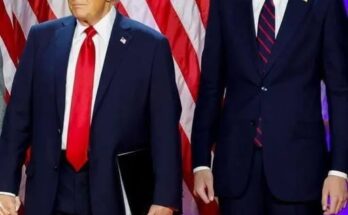
Broadcast from Mar-a-Lago under the soft glare of crystal chandeliers, Donald Trump’s voice carried a calm that belied the magnitude of what he was saying. “Venezuela,” he declared, “is now under American control.” The announcement hit like a thunderclap — stunning diplomats, generals, and allies across the world.
In the span of a few sentences, Trump revealed what no one outside a tight inner circle had known: Venezuelan President Nicolás Maduro had been captured in a covert U.S. operation. “We got him,” Trump said, smiling into the camera. “The tyrant is gone.” He boasted that American forces had acted swiftly, flawlessly, and — in his words — “without losing a single brave soul.” Then came the phrase that made even seasoned analysts blanch: the United States, he said, would now “run” Venezuela and its oil “for the people.”
There had been no prior notice to Congress. No briefing to NATO allies. No legal justification offered to the United Nations. The entire announcement felt less like policy and more like a proclamation — an old-world declaration of conquest wrapped in 21st-century media spectacle. Within minutes, social feeds erupted. By dawn, capitals from London to Brasília were scrambling to understand whether this was liberation, invasion, or something altogether new.
Trump’s statement marked a break so sharp it seemed to slice through decades of American foreign policy. In a single night, the United States had done what it had avoided even during the height of the Cold War: it had overthrown a sitting foreign government and taken its leader into custody. Maduro and his wife, Cilia Flores, were reportedly flown out of Caracas aboard a military transport and brought onto U.S. soil. Trump hailed the mission as a “bloodless triumph” and promised “peace, liberty, and justice for all Venezuelans.”
But even as he spoke, the skies above Venezuela told a different story. Airstrikes lit up the night over military bases, naval ports, and communication centers. Civilians in coastal cities filmed the thunder of explosions and uploaded them to social media before power went out. “Bloodless” felt like wishful thinking.
In Washington, the mood was electric and uneasy. Lawmakers woke to headlines describing “Operation Freedom Dawn” — a mission no one outside the Executive Branch had authorized. The Pentagon remained tight-lipped. Intelligence officials avoided television cameras. And within hours, Trump had already hinted at something even bolder: “Cuba is next,” he said, a remark that sent shivers through diplomatic circles and markets alike.
For Venezuela, the world’s eyes now turned to what would follow. American troops reportedly secured oil infrastructure and government buildings in Caracas. U.S. officials promised that a “transitional council” — handpicked from opposition leaders — would soon take over governance. State television stations went dark. Maduro’s supporters vanished from public view. The silence felt less like stability than shock.
To many Venezuelans, Trump’s words of “freedom” rang hollow. They had heard them before — from other powers, in other centuries. The promise of a “real country,” as some U.S. officials phrased it, sounded more like a warning than a gift. For families crouched under the flight paths of airstrikes, for oil workers ordered to “stand down,” for the millions scattered across Latin America who had fled Venezuela’s collapse, this was not an ending. It was the beginning of something far more uncertain.
In Caracas, smoke drifted over the hills. In Washington, senators demanded answers. And in between — across a hemisphere already stretched thin by crises — the question now lingered like the echo of a detonation: when one nation’s leader can be seized overnight, and another’s fate announced on television, what does “sovereignty” even mean anymore?