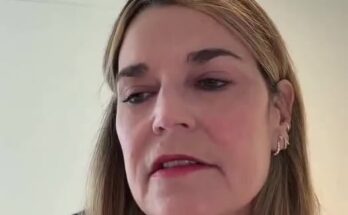
The Last Light of Tatiana Schlossberg
A young mother. A dying daughter. A family already fractured by the weight of American mythology. Tatiana Schlossberg’s final year unfolded like a slow eclipse—each day darker than the last, each moment a reminder that time was no longer something she could count, only something she could hold.
Between chemo drips and bedtime stories, she built a fragile rhythm: mornings filled with hospital monitors, evenings with the soft giggle of her son and the steady breath of her baby daughter. It was a life split between two worlds—one ruled by medicine and fear, the other by the desperate tenderness of motherhood. While her body weakened, her mind remained fiercely alive, observing everything with the sharp, unsparing clarity of a journalist who knew the story she was living would soon become her last.
There was an unbearable irony in it all. As she fought for her life, her cousin—celebrated, controversial, and powerful—was helping unravel the scientific foundations of the very treatments that kept her alive. The divide between family and belief, between loyalty and truth, widened into something tragic and almost cinematic. Yet Tatiana, even in anger, never lost her compassion. She wrote not with bitterness, but with sorrow, as if mourning the distance between what her family once stood for and what it had become.
Her essays from those months were written like letters from the edge of the world—raw, luminous, aching with the awareness of finality. She confessed that her greatest fear was not the inevitability of death, but the thought of fading from the memory of those she loved most. She wanted her children to remember her laughter, her scent, the way she sang off-key in the car. She wanted them to know that even as her body failed, her love did not.
Around her, the Kennedy legacy seemed to darken once more. Her mother, Caroline, who had already buried a father taken by gunfire and a brother taken by the sky, now faced the unthinkable: outliving her own child. The old family curse—the one whispered in books and documentaries, spoken of in tones of awe and pity—seemed to stir again. But Tatiana refused to surrender to that narrative. She would not be another headline, another tragedy bound to a famous name.
She insisted on being remembered differently—not as a symbol of loss, but as a woman of conviction. A journalist who wrote with honesty. An environmentalist who fought for a planet she knew her children would inherit. A mother whose brief, brilliant life was defined not by illness, but by purpose.
In the end, Tatiana Schlossberg became what she feared her children might lose: a memory strong enough to defy absence. She did not survive her final year—but she transformed it into something enduring. Love, distilled through pain, became legacy. And in the quiet spaces she left behind—the bedtime stories, the handwritten notes, the echo of her laughter—the next generation of Kennedys will still find her. Not as a ghost, but as a guide.