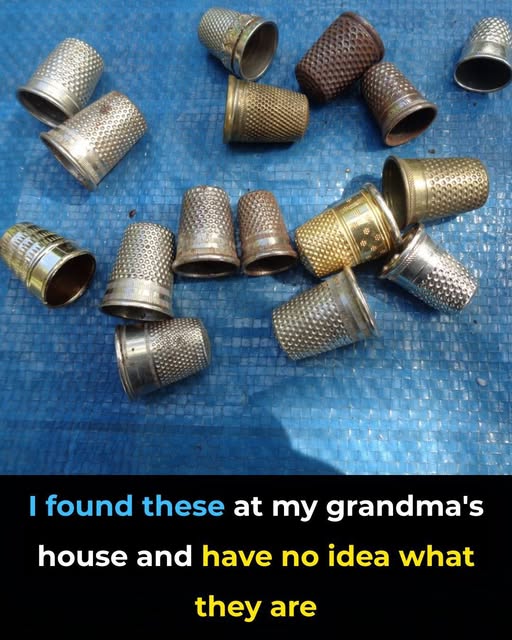
Thimbles: Tiny Shields with a Mighty History
Thimbles have guarded human hands for thousands of years, yet most people barely notice them. This tiny shell of metal, bone, or ivory may seem insignificant today, a quaint relic in a sewing box, but behind its modest exterior lies a story of pain, ingenuity, power, and quiet status. From Roman workshops to the glittering courts of Renaissance Europe, thimbles have shaped how people dressed, labored, and survived. What began as a simple “thumb bell” for protection eventually evolved into a symbol of wealth, skill, and social identity—proof that even the smallest objects can carry the weight of history.
Long before they became curiosities for collectors or tokens in craft shops, thimbles were vital survival tools. In ancient China, Rome, and beyond, they protected fingers as families stitched garments to shield themselves from the cold, patch tents, and mend the fabric of daily life. Early thimbles, carved from bone, bronze, or ivory, were treasured possessions because sewing was not a leisure activity—it was the line between comfort and suffering, warmth and exposure. Each handcrafted thimble was a badge of resourcefulness, a tool that allowed survival in a world where every stitch mattered.
As centuries passed, this humble protector quietly transformed into a marker of identity, craft, and class. By the sixteenth and seventeenth centuries, thimbles had graduated from practicality to artistry. Silver and gold thimbles glimmered on the fingers of Europe’s elite, their surfaces engraved with intricate patterns, encrusted with gemstones, and polished to perfection. What had once been a functional necessity became a personal heirloom, a symbol of skill and refinement passed from parent to child along with lessons in dexterity, patience, and pride. In these gleaming treasures, wealth and artistry met the everyday labor of making, turning even the smallest object into a statement.
Even today, thimbles continue their quiet service. Modern versions—steel for heavy-duty work, leather for comfort, plastic for casual mending—still perform the same essential job: to protect, steady, and empower the hand that sews. Each dent, scratch, and worn edge is a testament to countless hours of human effort, a small chronicle of creation, resilience, and care. In every tiny thimble, there is a story that stretches across millennia: of survival, ingenuity, artistry, and the enduring human impulse to make, repair, and leave a mark, no matter how small.
Thimbles may be small, but their history is mighty—a testament to the hands that shaped the world one stitch at a time.