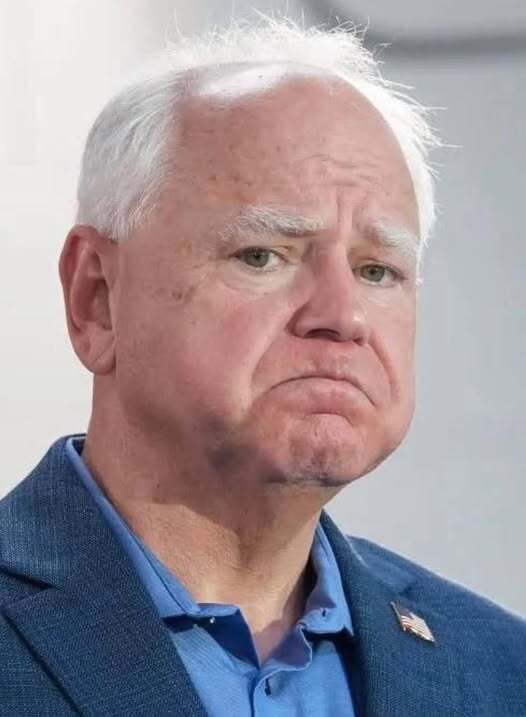
The confirmation of Tim Walz’s new role has captured attention far beyond what many would have expected from a routine political announcement. At first glance, the event could have seemed ceremonial — another line in the chronicle of American governance. Yet the reaction, both within Minnesota and across national political circles, suggests something far weightier: a moment that reflects not only recognition of Walz’s past work but also the potential reshaping of his influence on a larger stage.
Known for a steady, pragmatic, and results-driven approach, Walz has built a political identity that values governance over grandstanding, substance over spectacle. Throughout his career, he has cultivated a reputation for focusing on tangible outcomes rather than political theatrics — a rare quality in an era where hyper-partisan narratives often dominate headlines. This confirmation, therefore, is being interpreted not merely as an appointment, but as a signal of what consistent, principled leadership can achieve in today’s fractious political climate.
From the beginning of his public service, Walz has prioritized issues that directly impact everyday lives. Education, healthcare access, infrastructure, and economic stability are more than talking points for him; they have been the core pillars of his work. Supporters note his ability to bridge ideological divides, emphasizing collaboration over conflict, negotiation over rhetoric. His leadership style — one grounded in practical solutions and disciplined follow-through — has often contrasted sharply with the more performative politics seen elsewhere, earning him both local respect and national attention.
Within Minnesota, the confirmation is widely viewed as a validation of years of measured, conscientious governance. Rather than chasing headlines, Walz has spent decades addressing the concerns of his constituents with patience and diligence, tackling challenges methodically and with attention to detail. Observers point out that this style has not only delivered concrete results but has also built a foundation of trust among voters who value consistency and integrity over showmanship.
Nationally, analysts are watching closely. In a political era marked by cynicism toward institutions, Walz’s approach — measured, collaborative, and pragmatic — offers a compelling counter-narrative. Some see in him a reflection of a broader desire for predictability, competence, and stability, qualities that have become increasingly precious amid uncertainty and partisan upheaval. His confirmation raises questions about how such a leadership style might translate to broader responsibilities, and whether it could position him for higher-profile roles in the years ahead.
The implications of this moment extend beyond ceremony or optics. Whether this confirmation marks a lasting elevation in Walz’s political influence or merely a temporary surge in visibility will depend on the choices he makes moving forward. How he navigates emerging challenges, prioritizes initiatives, and communicates his vision will shape not only his legacy but also the perception of effective leadership in contemporary politics.
One thing is already clear: Walz’s confirmation has placed him in a more prominent position within national discourse, inviting scrutiny, debate, and anticipation. As observers and constituents watch how he handles the responsibilities of this new role, his next moves may define not only this chapter of his career but also the broader narrative of what practical, principled governance can achieve in a divided political landscape.
In a time when headlines often favor spectacle over substance, Walz’s confirmation serves as a reminder that steady, thoughtful leadership still matters — and that sometimes, the most consequential political developments unfold quietly, built on a foundation of consistent service rather than dramatic gestures.