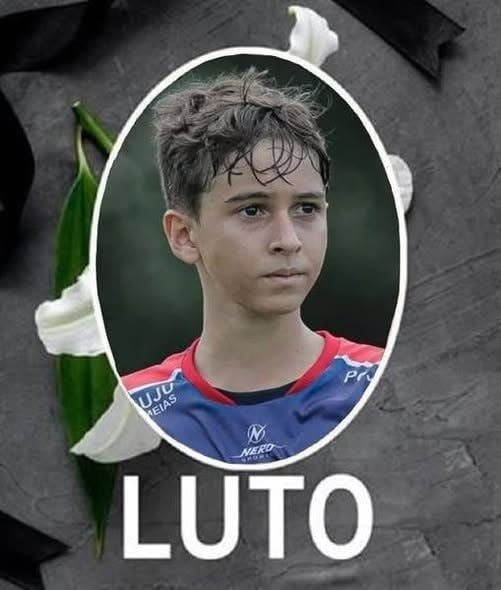
He showed up that afternoon the same way he always did — with a grin that stretched ear to ear, a spark in his eyes, and that boundless energy only a 14-year-old with big dreams can carry. His teammates laughed as he tossed gentle jabs their way, talking excitedly about the new plays he wanted to master and how this was going to be their season. The field felt alive with promise, the air filled with the easy rhythm of youth — cleats thudding against turf, whistles echoing, and laughter bouncing from one sideline to the other.
No one could have imagined how quickly that light would dim.
Just minutes into warm-ups, he paused, pressing his hand to his chest. “It’s weird,” he murmured to a coach nearby. “It’s like this pain keeps growing.” At first, it seemed like nothing more than a strain — a minor discomfort from a long day. But in seconds, confusion turned to alarm, and alarm to sheer panic. The coaches called out for help as he collapsed to the ground, teammates frozen in disbelief. Within moments, paramedics were on the field, their calm urgency slicing through the stunned silence. Parents gathered at the fence, holding each other, whispering prayers.
They fought to stabilize him — the sirens, the flashing lights, the rush to the hospital. Doctors worked with unrelenting focus, chasing answers that refused to come fast enough. His family waited, hope flickering against the growing shadow of the unthinkable. And then, that silence again — the kind that follows words no one ever wants to hear.
The news rippled outward, moving from locker room to classroom, from neighborhood streets to local headlines. A community that had watched him grow, laugh, and lead suddenly found itself asking a question with no easy answer: How does a life so bright, so young, end so soon?
In the days that followed, grief settled over the town like a heavy fog. His teammates left flowers and handwritten notes at the edge of the field. The scoreboard stayed dark, save for his number displayed in white — a quiet tribute to the player who once lit it up with joy. Coaches stood together, eyes red but voices steady, promising to honor his spirit by teaching the next generation not just how to play, but how to care for one another — the way he did.
For his family, time has stopped. The laughter in the house sounds different now. His room remains as he left it — cleats by the door, jersey draped over a chair, dreams still pinned to the wall in the form of photos and posters. Yet, amid the heartbreak, there’s gratitude too — gratitude for 14 extraordinary years filled with love, laughter, and unforgettable moments.
Authorities continue to review medical reports, seeking clearer answers about what caused his sudden collapse. But even as doctors and investigators search for explanations, the community has turned its focus toward something deeper — unity, remembrance, and healing. Speculation has been replaced with compassion, and the impulse to question has given way to the need to remember.
A memorial service is being planned at the stadium where he spent countless afternoons practicing under the sun. There, surrounded by friends, coaches, and classmates, his life will be celebrated — his quick wit, his quiet determination, his contagious laughter, and the kindness that drew people to him. They’ll share stories that capture who he was: the teammate who always stayed late to help others, the son who made his parents proud with every small victory, the friend who never forgot to say “thank you.”
As the lights dim that evening and candles flicker along the stands, the field will no longer just be a place for games. It will become a space for reflection — for remembering a young life that, though heartbreakingly short, was beautifully full.
In the end, his story will not be defined by how he died, but by how he lived: with courage, warmth, humor, and the unshakable belief that tomorrow always held something good. And for everyone who knew him, that belief — that light — will never fully go out.