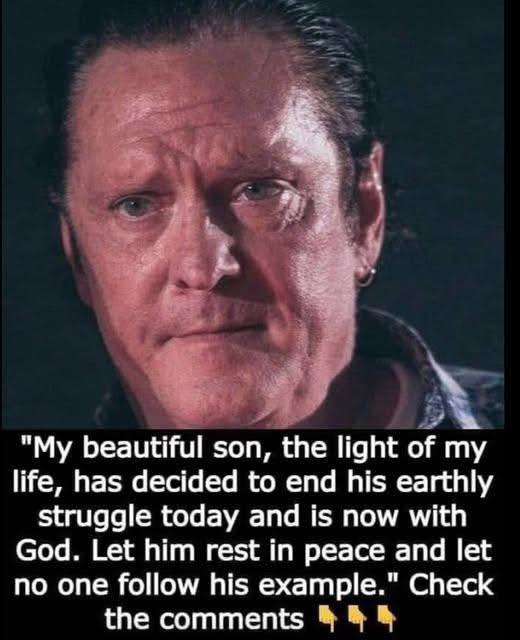
“Love you, Dad.”
Three simple words. No explanation. No alarm bells. Just a message that looked ordinary—until it became unbearable in hindsight. For Michael Madsen, that brief text from his son Hudson would later reveal itself as a goodbye disguised as love, a final reach for connection before everything shattered.
The actor known for portraying men of steel and fury was suddenly confronted with a pain no role could prepare him for. Behind the tough characters and gravelly voice was a father replaying every moment, wondering how he could have missed the quiet storm unfolding inside his child. Hudson had checked every box that, from the outside, suggested strength and success. He was an Army sergeant who served his country, including a tour overseas. He wore his uniform with pride. He had married, planned a future, and carried himself with discipline and composure.
On social media, he smiled. In photographs, he stood tall. To the world, Hudson looked steady—resilient, capable, unbreakable. But beneath that image was a young man struggling in silence, weighed down by pressures he didn’t feel permitted to name. Private battles with health, disappointment, and uncertainty collided with a culture that often teaches soldiers—and men in general—that asking for help is the same as admitting weakness. Strength became armor, and that armor became isolating.
In the days that followed, the grief spilled into public view. Heartbroken messages from loved ones and the family’s statement echoed with the same unbearable question: How could this happen without anyone knowing how bad it was? There were no clear answers—only the haunting realization that silence can be incredibly convincing.
Michael Madsen’s call for an investigation was never about pointing fingers. It came from a place of anguish and urgency—a plea born from the hope that understanding what was missed might prevent another family from standing where his now stood. His message, unspoken but unmistakable, is one too many parents learn too late: that pain doesn’t always announce itself, and that love alone, without open conversation and support, is sometimes not enough.
This story isn’t just about loss. It’s about the danger of assuming strength means safety, and about how the quietest people can be carrying the heaviest weight. Above all, it is a reminder that checking in—really checking in—can matter more than we ever realize, and that listening for what isn’t being said may be the most important act of care there is.