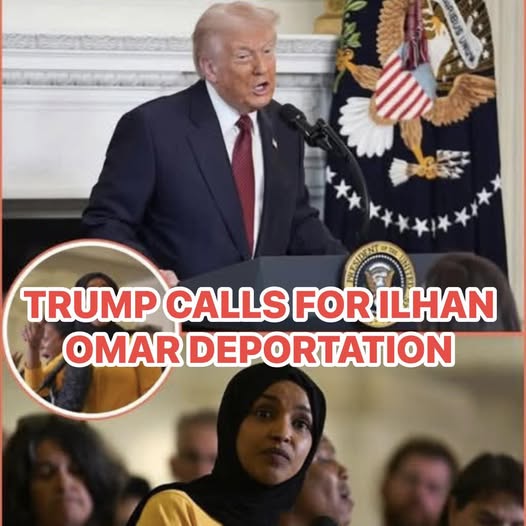
The arena fell silent for half a breath—just long enough for anticipation to tighten its grip—then it detonated. Trump’s words tore through the noise, through Ilhan Omar, through Washington itself: “Get the HELL out of our country.” The reaction was instant and electric. Supporters erupted into thunderous applause. Critics stiffened in disbelief. Phones shot into the air as screens lit up like flares. Within minutes, the line escaped the rally and surged across the nation. It was no longer just a piece of political rhetoric; it had transformed into a national ultimatum—a dare, a dividing line drawn in all caps.
In the hours that followed, the country seemed to split along that single sentence. For millions of Americans, Trump’s outburst felt like long-suppressed anger finally given voice. To them, it was a blunt demand for loyalty, a declaration that those who harshly criticize the nation should stop sheltering behind its freedoms and institutions. They heard defiance, strength, and a refusal to apologize.
For millions of others, the words landed very differently. They sounded less like toughness and more like a threat—a chilling reminder that dissent can be met with exclusion, that immigrants, minorities, and even elected officials can be told they don’t belong. What thrilled one half of the nation rang like a warning siren to the other. The same sentence, the same volume, but two entirely different realities.
Cable news panels spun into overdrive. Social media fractured into warring camps. Context dissolved as clips were shared, reposted, weaponized. But beneath the noise, something more profound took shape. Omar did not retreat. Trump did not soften or walk anything back. Neither side blinked.
Their clash crystallized a brutal truth about modern American politics: it is no longer primarily a battle over policy or legislation, but over identity, loyalty, and ownership—over who gets to say “this is our country,” and who is deemed an outsider. That night wasn’t just another headline or another Trump moment destined for the archives. It was a line in the sand, forcing Americans to confront where they stand—and to wrestle with an increasingly urgent question: what does “America” mean now, and who gets to define it?