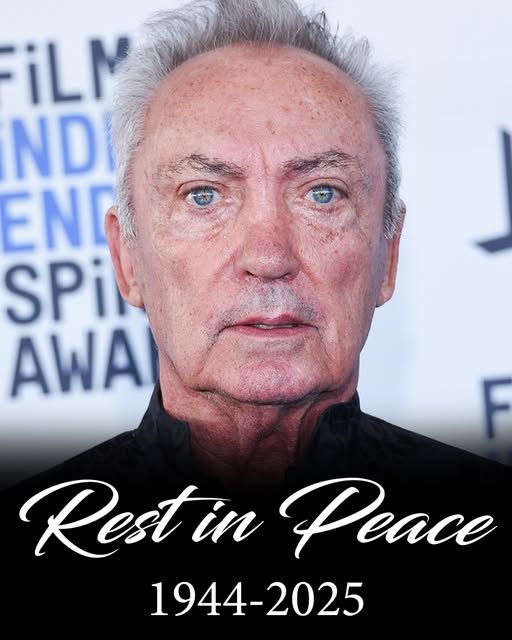
He was almost erased before he even drew his first breath.
Born amid the ruins of a world falling apart, a newborn dragged from collapsing rubble, Udo Kier’s very existence seemed precarious, destined to vanish like so much debris around him. Yet, against all odds, he chose not to disappear. He chose, instead, to confront a world that had tried so hard not to see him. And for decades, he did not merely exist—he seduced, terrified, unsettled. Lovers recoiled. Directors whispered his name in awe or fear. Audiences leaned forward, caught in the magnetic pull of a man who seemed to embody the uncanny, the forbidden, and the unforgettable.
Kier’s beginnings were as stark as they were formative. A nameless infant in war-torn Germany, his earliest memories were shaped by hunger, the chill of empty rooms, and the shadow of a father-shaped absence. Yet even in deprivation, he carried himself as if life’s hardships were rehearsals for a grander stage. Every deprivation, every narrow escape, seemed to sharpen a gaze that would one day make the audience hold their breath. Fate, chance, and a London café collided, and when opportunity brushed past him, Kier stepped into the frame—and never stepped back.
Onscreen, he became a master of transformation. He made monstrosity intimate, cruelty almost tender. In his hands, villains were human, the damned recognizable, the grotesque strangely alluring. He forced viewers to look where they usually turned away—to see themselves reflected in the eyes of the outsider, the queer, the broken. His art was fearless because he was fearless: unflinching, uncompromising, alive in a way that few actors dare to be.
Offscreen, Kier’s life mirrored the audacity of his roles. He sought out color, calm, and defiance in the deserts of his later years, creating a space where the intensity of his craft could meet the serenity of solitude. There, far from the cameras yet never far from the echoes of his work, he shaped a final act of quiet rebellion—living on his own terms, unbound by convention or expectation.
And when death finally claimed his body, it could not silence the presence he had carved into the collective imagination. Cinema keeps him alive, preserving that unblinking gaze, that almost impossible magnetism, the soul that refused to look away from life, from horror, from beauty, or from the truth. In every frame, in every shadowed glance, Udo Kier remains—a reminder that some lives are too vivid, too daring, and too singular to ever be erased.