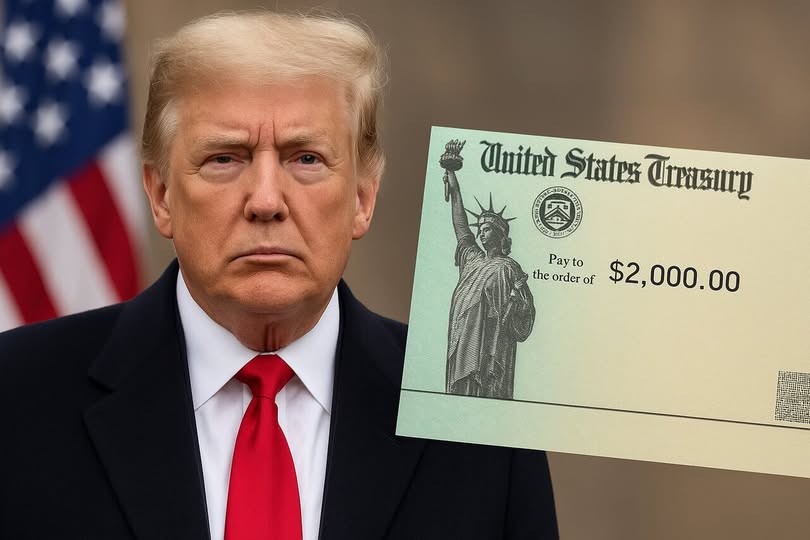
Trump Promises $2,000 ‘Tariff Dividend’ for Every American — Calls Opposing Tariffs “Foolish”
Donald Trump’s latest economic pledge has electrified his supporters and rattled his critics: a promise to deliver a $2,000 “tariff dividend” to every American household. Standing before a cheering crowd, Trump vowed to use revenue from tariffs on foreign goods to fund direct payments to citizens, calling it “America’s reward for putting America first.”
The announcement comes at a moment of extraordinary political tension — when economic anxiety, legal uncertainty, and campaign ambition are colliding. The Supreme Court is currently reviewing whether Trump’s expansive use of emergency tariff powers is constitutional. A ruling against him could upend the entire plan, forcing the government to issue refunds to importers rather than deliver any kind of public dividend. Yet the mere mention of a $2,000 payout landed with force across a nation weary from inflation, high debt, and stagnant wages. For many, it sounded like hope wrapped in patriotic rhetoric.
Still, the numbers tell a more sobering story. While tariffs have generated roughly $151 billion in revenue so far, that’s a far cry from the “trillions” Trump has claimed. Experts warn that tariffs — essentially taxes on imports — tend to raise prices for consumers, not just for foreign producers. That means the very people expecting a $2,000 windfall could also be the ones paying more for groceries, electronics, and cars.
Turning Trump’s bold vision into reality would also face major legislative hurdles. To redirect tariff revenue into direct payments or tax rebates, Congress would need to approve a sweeping new framework. The process would be complex, politically explosive, and difficult to sustain in a nation already burdened by $37 trillion in national debt.
But Trump’s message isn’t only about math — it’s about momentum and defiance. He’s positioning himself as a populist warrior against what he calls “globalist economics,” arguing that tariffs protect American workers, fund American families, and punish countries that “cheat the system.” Critics, however, see something else: a risky economic gamble sold through political theater, with more headlines than hard plans behind it.
Whatever the outcome, the “tariff dividend” episode reveals a larger truth about modern politics — grand promises are easy; sustainable solutions are hard. Transforming tariffs into real, equitable relief would require not just power, but discipline, cooperation, and a willingness to balance ambition with reality.
For now, Americans are left to wonder: is this $2,000 dividend a visionary plan to return wealth to the people — or another dazzling campaign promise destined to disappear once the applause fades?