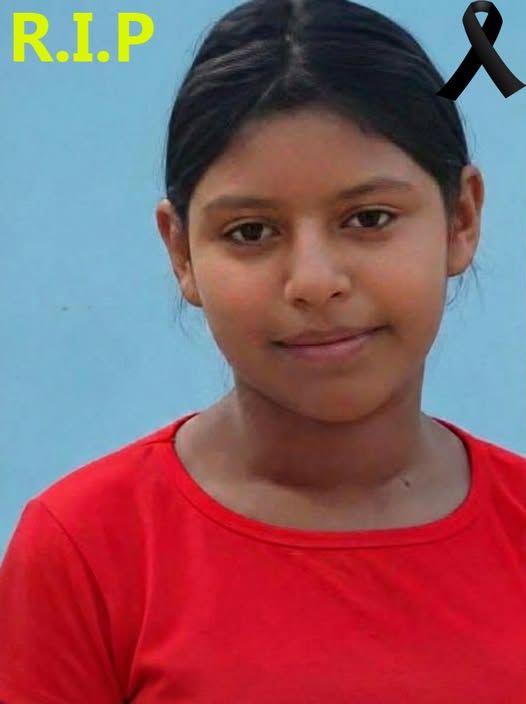
The smell reached them before the truth did—sharp, unsettling, impossible to ignore. It drifted across a quiet corner of a vacant lot, catching the attention of a neighbor who could not shake the feeling that something was terribly wrong. What followed unraveled quickly: a call to authorities, the arrival of sirens slicing through the stillness, the flashing lights, the yellow tape. And then, the unbearable realization—a child’s body, left behind near a metro station, her name not yet spoken but her story already echoing with grief.
In a matter of hours, an ordinary neighborhood became the center of a tragedy that no family should ever endure. Four suspects were taken into custody, yet answers remained elusive, leaving behind a trail of questions that weighed heavily on a shaken public. What began as a simple errand—one small, routine moment in a child’s day—had turned into something unthinkable. And across the country, a quiet but growing anger began to rise: how could something so ordinary end in such horror?
Perla’s final walk, meant to be nothing more than a quick trip to buy candy, has since become something much larger—a symbol of the fractures running through the social fabric of Mexico. Her discovery, in that abandoned lot near the Constitución de 1917 station, revealed not only the cruelty of a single act but also the deeper reality many families face every day: a life lived under the shadow of uncertainty, in communities where safety feels like a distant promise rather than a basic right.
The arrests, instead of bringing comfort, have intensified the scrutiny. People are no longer satisfied with surface-level responses. They are demanding clarity, accountability, and a justice system that does more than react—they want one that prevents, protects, and proves that no life is disposable. The case has ignited conversations that extend far beyond one neighborhood, forcing a nation to confront uncomfortable truths about neglect, vulnerability, and impunity.
Outside Perla’s home and near the metro station where her story took its darkest turn, a quiet vigil continues to grow. Candles flicker against the night, their small flames defying the darkness. Handwritten posters, some trembling with emotion, carry messages of love, grief, and insistence: remember her name. Her family, shattered by loss, asks for privacy as they navigate an unimaginable pain, yet they also stand firm in one demand—that Perla not become just another forgotten statistic.
Her story now belongs to more than just those who knew her. It has become a collective promise, whispered in vigils and echoed in protests: that children must be protected with urgency and care, that every disappearance must be treated as a crisis, and that silence can no longer be the norm. Perla’s memory is no longer only about loss—it is about a call to action, a refusal to look away, and a determination to ensure that no child’s simple, everyday journey ever ends in fear, in darkness, or in silence again.