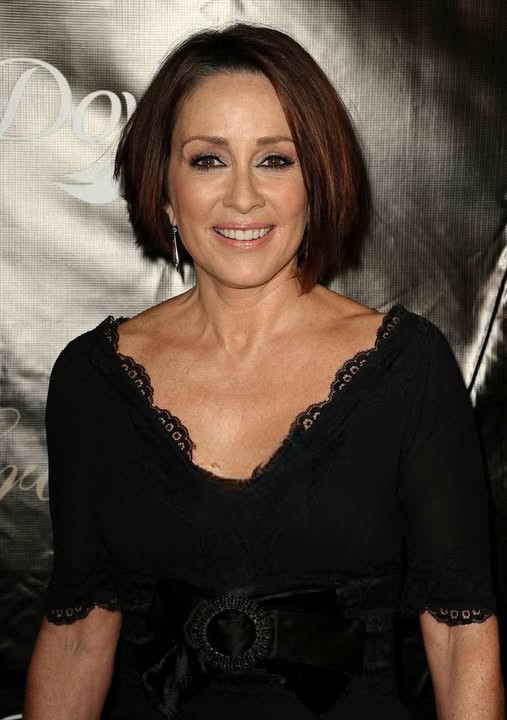
The first headlines didn’t just land—they hit with the force of something personal, almost jarring. Patricia Heaton, a face so many had long associated with warmth, stability, and the familiar rhythms of family life, was suddenly recast in a narrative that felt starkly different. Words like “leaving little to the imagination” spread quickly, charged with implication and judgment. Within hours, the reaction spiraled into something far bigger than a fleeting celebrity moment. Shock gave way to fascination. Admiration clashed with disapproval. Fans who had grown up watching her were caught off guard, unsure how to reconcile the image they carried with what they were now seeing. Critics wasted no time sharpening their opinions, while supporters rallied with equal intensity, pushing back against the tone of the conversation. What began as a handful of photos ignited into something raw and revealing—a cultural flashpoint touching on age, autonomy, desire, and the unspoken rules about who is allowed to command attention, and how.
But the uproar surrounding Patricia Heaton’s photos ultimately reveals far more about the audience than it does about her. For years, she existed in the public imagination as a fixed figure—the dependable, relatable mother archetype, frozen in a kind of nostalgic permanence. It’s a role that comforted people, one they returned to again and again, until the line between character and person quietly blurred. Yet the woman behind that image was never bound to it. She was never obligated to remain unchanged, to shrink herself to fit a version of the past that others preferred to preserve. When those images surfaced, they didn’t just challenge expectations—they collided with them, exposing how deeply rooted those expectations had become.
The reactions, intense and often contradictory, laid bare a cultural tension that rarely gets addressed so openly. Some viewers interpreted her choices as bold, even liberating—a refusal to disappear, a declaration that visibility and self-expression don’t come with an expiration date. Others, however, reacted with discomfort, even a sense of betrayal, as though she had stepped outside an invisible boundary that had been drawn for her long ago. That divide speaks volumes. It highlights the quiet but persistent double standard that shapes how aging is perceived: men are often celebrated for evolving, for embracing reinvention, for growing more daring with time. Women, by contrast, are frequently expected to soften, to retreat, to age gracefully in ways that feel palatable and non-disruptive.
By refusing to follow that script—perhaps without even intending to make a statement—Heaton became the center of a much larger conversation. The moment stopped being about photographs and started becoming about perception, control, and the discomfort society still feels when women assert ownership over how they are seen. In that sense, the controversy functions less like a scandal and more like a mirror. It reflects a collective unease, a lingering resistance to the idea that women can exist fully and unapologetically at every stage of life—not as static symbols, but as evolving individuals.
What makes the moment so compelling is not just the intensity of the reaction, but what it uncovers beneath the surface. It forces a confrontation with questions that don’t have easy answers: Why do we cling so tightly to certain images of people? Why does change, especially in women, feel so disruptive? And who, ultimately, gets to decide what is appropriate, powerful, or provocative?
In stepping outside the expectations placed upon her, Patricia Heaton didn’t just spark headlines—she inadvertently challenged a narrative that has long gone unquestioned. And in doing so, she exposed just how far there is to go before society becomes truly comfortable with women claiming space, visibility, and agency on their own terms, at every age.