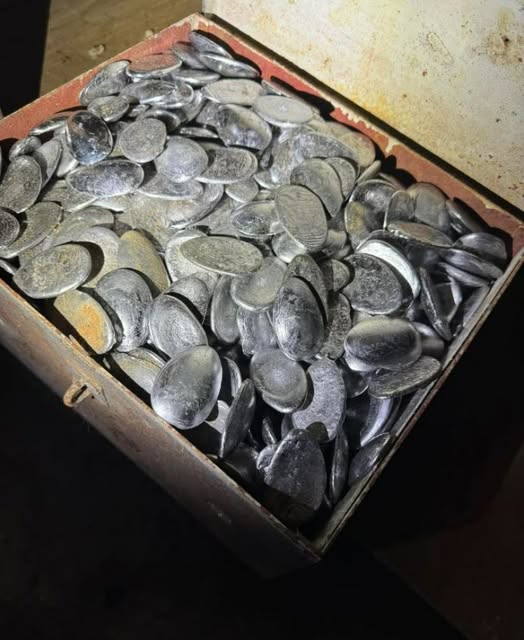
They looked harmless at first glance—almost ordinary, like something forgotten after a quiet supper and left to cool on the edge of a workbench. Heavy iron spoons, their surfaces darkened and roughened by years of fire, sat tucked away in old toolboxes, hanging from barn shelves, or resting beside oil-stained benches. To anyone unfamiliar with their purpose, they might have seemed like simple kitchen relics, worn and useless. But in truth, they were anything but ordinary.
These were not spoons meant for soup or stew. They were tools of necessity—cast iron bullet molds designed for molten lead, for turning raw material into ammunition, for turning scarcity into survival. In a time when store shelves were not always an option and self-reliance wasn’t a lifestyle choice but a daily reality, these simple-looking tools carried immense weight—both literally and figuratively.
Around open flames and glowing stoves, families would gather in close-knit circles. The fire would crackle and breathe, casting flickering light across serious faces. Children stood nearby, wide-eyed and silent, watching carefully as their parents worked with steady, practiced hands. Scrap lead would be placed into the spoon, melting slowly into a shimmering, dangerous liquid that reflected the fire like a living thing. The air carried a faint metallic scent, warm and sharp, as if the moment itself was forged in heat and concentration.
Then came the most delicate part—the pour. A steady hand was required, because molten metal does not forgive hesitation. One slip, one sudden movement, one lapse in attention, and the consequences could be severe. This was not casual work. It demanded respect, patience, and an almost ritual-like focus. The metal would be guided into molds, cooled, and transformed into bullets or fishing sinkers—small objects that held the power to feed a family or protect a home.
What might appear today as a simple act of crafting was, in those moments, a quiet expression of resilience. Each bullet cast from those iron spoons represented more than just ammunition. It symbolized ingenuity, the ability to take what was discarded and reshape it into something vital. It was survival shaped by fire, patience, and skill.
But beyond the practicality, there was something deeper happening in those dimly lit spaces. Those evenings were not only about producing tools—they were about passing down knowledge. Children learned by watching, absorbing lessons in caution, responsibility, and craftsmanship. They learned that usefulness could be created, not just purchased. They learned that effort had weight, and that survival often came from steady hands and shared work.
Every finished piece cooled in silence, still warm with purpose. Each one carried with it a story—of families making do, of resourcefulness born from necessity, of quiet determination in the face of limited means. These weren’t just objects; they were the physical remnants of lived experience, shaped by fire and necessity into something enduring.
Today, as collectors, hobbyists, and history enthusiasts rediscover these cast iron spoon molds, they are not simply looking at antique tools. They are reaching back into a different rhythm of life—one where self-reliance was not a concept but a craft practiced daily. In these heavy, blackened spoons lies a fragment of Americana that refuses to fade: a reminder of grit under pressure, of skill learned through repetition, and of families bound together by work, fire, and shared purpose.