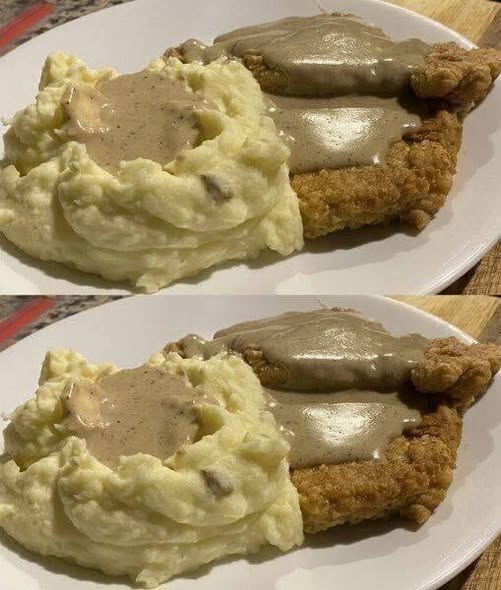
Most mashed potatoes are secretly ruined long before they ever make it to the dinner table—and most home cooks never realize why. You can peel them carefully, cut them into perfect chunks, boil them until fork-tender, and mash them with generous amounts of butter and cream, convinced you’re doing everything right. Yet somehow, the final result still falls flat. They taste heavy but not rich, smooth but strangely lifeless, filling but forgettable. So you add more butter. More salt. More cream. And still, something is missing.
The truth is, the problem usually has nothing to do with the mashing technique or the amount of dairy you use. The real mistake happens much earlier, in a step so routine most people never question it: boiling potatoes in plain water.
It sounds harmless, even traditional—but plain water quietly strips potatoes of much of what makes them flavorful in the first place. As they simmer, their natural starches and subtle earthy sweetness begin leaching out into the water, leaving the potatoes watered down before they’re ever mashed. By the time they hit the bowl, you’re not building flavor—you’re trying to recover flavor that has already been lost. That’s why so many mashed potatoes rely on excessive butter, cream, cheese, or salt just to taste satisfying. They’re compensating for a weak foundation.
But change just one step, and everything transforms.
Instead of boiling potatoes in plain water, simmer them in chicken stock—or even a simple mix of stock and water—and something remarkable happens. The potatoes absorb flavor as they cook, becoming seasoned from the inside out rather than bland at their core. Every bite tastes deeper, richer, and more complete before you add a single spoonful of butter. The stock doesn’t overpower the potatoes; it amplifies what was already there, turning an ordinary side dish into something layered and luxurious.
And if you want even more depth, leave the skins on.
This overlooked choice adds a rustic character that elevates mashed potatoes far beyond the smooth, one-note versions most people are used to. The skins contribute an earthy complexity, a hint of nuttiness, and just enough texture to make every bite feel hearty and homemade. Suddenly, the dish feels warm, comforting, and intentional—less like a generic side and more like the centerpiece people keep going back for seconds.
Once the potatoes are mashed, you’ll notice another surprising difference: you need far less to make them extraordinary. A modest amount of butter melts in beautifully instead of carrying the entire dish. A dollop of sour cream adds brightness instead of masking blandness. Fresh chives bring freshness and color rather than serving as decoration. Every ingredient works to enhance, not rescue.
That’s the difference when the foundation is built on flavor from the beginning.
Mashed potatoes were never meant to be a blank canvas drowned in dairy. At their best, they should taste deeply of potato—earthy, rich, comforting, and full of character—with every addition making them better, not merely bearable. And all of that starts in the pot, with the liquid you choose.
It may seem like a small change, almost too simple to matter. But once you taste mashed potatoes simmered in stock instead of plain water, it changes the way you think about the dish entirely. The flavor is fuller. The texture is more satisfying. The comfort feels deeper, somehow more honest.
And after that first bite, going back to plain water doesn’t just seem like a missed opportunity—it feels like realizing you’ve been making mashed potatoes wrong all along, and missing the true heart of comfort food the entire time.