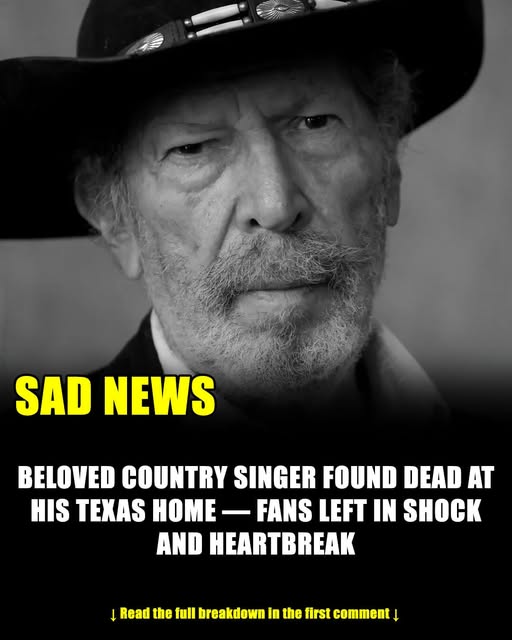
Texas has lost a voice that could never be imitated, softened, or replaced. Kinky Friedman—a man who lived as loudly as he spoke—has left behind a silence that feels heavier than words can carry. His passing at 79 does not feel like the closing of a single life so much as the end of a certain kind of fearless storytelling: the kind that refused to ask permission, refused to behave, and refused to look away from life’s absurdities.
He was brash in the most unforgettable way—sharp-tongued, mischievous, and deliberately unpolished in a world that often demands polish above truth. Onstage and on the page, he carried a rare kind of electricity, the sense that anything could happen at any moment and probably would. Fans didn’t just listen to him; they braced themselves for him. He could make a room laugh, then make it think, then make it uncomfortable enough to realize it had been asleep.
Friedman’s life read like a novel that refused to choose a genre. He was a country singer who poked fun at Nashville while still loving the bones of its music. A mystery writer who blurred the line between author and character until the boundary practically dissolved. A political candidate who treated the idea of power not as something to worship, but something to challenge, satirize, and expose. And always, beneath the jokes and provocations, there was a streak of sincerity that people sometimes missed on the first pass—but rarely forgot after the second.
He had a gift for turning controversy into commentary, and commentary into art. Where others might have played safe, he leaned harder into the strange and the uncomfortable, trusting that honesty often looks like disruption before it looks like wisdom. That instinct made him polarizing at times, but it also made him unforgettable. He didn’t ask audiences to agree with him—he asked them to pay attention.
Now, the reaction to his absence is not just grief, but disorientation. Fans are not only mourning a performer; they are reckoning with the disappearance of a cultural force who made unpredictability feel like a kind of truth. Texas, in particular, feels it deeply—the loss of someone who both mocked and loved it, who understood its contradictions and wore them openly like badges of honor.
What remains is a legacy that refuses to sit still. His songs still carry that sly grin. His books still feel like puzzles written in cigarette smoke and punchlines. His public persona still lingers like a dare. Together, they form a portrait of a Texas that is rough-edged yet tender, chaotic yet strangely precise, grounded in humor but always reaching for something more honest underneath it.
In the end, he leaves no simple lesson, no clean moral, no neatly packaged goodbye. Instead, he leaves an invitation that feels very much like him: to live louder than comfort allows, to think sharper than convention expects, and to never apologize for the strange, complicated, beautifully imperfect person you are.