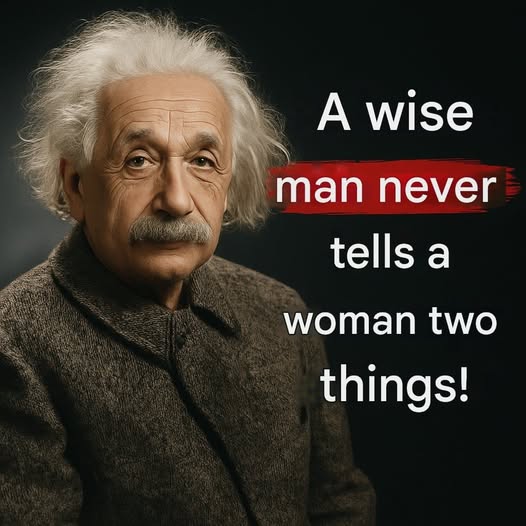
He didn’t say it to impress anyone. There was no performance in his voice, no clever phrasing meant to linger in memory. He said it plainly—like a man who had already lived through the consequences, who had learned the lesson the hard way and carried it with him ever since. It was just one sentence, but it held the weight of experience—about women, about money, about feelings—and within it was a quiet warning that most people only recognize when it’s already too late.
It wasn’t bitterness. It wasn’t cynicism. And it certainly wasn’t a rejection of love. If anything, it was the opposite. It was about surviving love—about understanding that something so powerful, so consuming, can also undo you if you step into it without awareness.
Because when you give too much, too quickly, something subtle begins to shift. The balance changes. What felt mutual starts to tilt. Your generosity—emotional or financial—stops being a gift and starts becoming an expectation. And expectations, when they grow unchecked, have a way of quietly reshaping the entire dynamic.
Hearts, once careful, become casual. Effort becomes assumed. And what began as affection can slowly turn into something else—something transactional, something uneven. Money, especially, has a way of complicating what should be simple. It introduces a quiet tension, an unspoken influence. It blurs the line between care and dependency, between giving and owing.
And then there are feelings—the deepest kind, the kind you don’t show everyone. When you hand those over too early, too freely, they can become leverage in ways you never intended. Not always out of malice, but sometimes out of human nature. What you believed was connection can, over time, begin to feel like control. And by the time you realize it, you’ve already placed the most valuable parts of yourself in someone else’s hands—the parts that hurt the most when mishandled.
Your savings. Your sense of self. Your emotional center.
What made his words powerful wasn’t just what he said—it was who he was speaking to. Not the guarded, distant version of you, but the part that longs to be fully seen. The part that wants to give deeply, love openly, and trust completely… while quietly fearing what happens if that trust is misplaced. The part that worries about being taken for granted but still hopes, every time, that this time will be different.
And that’s where boundaries come in.
Not as barriers. Not as walls meant to keep people out. But as doors—with locks. Doors that open slowly, deliberately, over time. Because access to your inner world—your emotions, your vulnerabilities, your financial reality—is something that should be earned, not assumed.
When you reveal everything too soon, you’re inviting someone into a space they may not yet know how to respect. Not everyone who enters your life is prepared for the weight of what you carry. And not everyone who is kind in the beginning has proven they can be careful in the long run.
Real intimacy doesn’t rush. It doesn’t demand instant transparency or unconditional access. It builds—layer by layer—through consistency. Through observation. Through time.
You watch how someone reacts when things don’t go their way. You notice how they handle disappointment, disagreement, limitation. You see who they are when the moment isn’t perfect, when the mood shifts, when life applies pressure. Because those are the moments that reveal whether someone can truly hold what you’re offering.
Love isn’t about immediate exposure. It’s not about laying everything bare in the hope that vulnerability alone will create connection. Real love asks for something deeper, something steadier: mutual responsibility. Not just for each other, but for what you’re building together—for your heart, your future, and the shared space in between.
His warning was never “Don’t love.” It was never “Don’t give.”
It was quieter than that. More honest. And far more difficult to practice:
Don’t offer what is sacred to someone who hasn’t yet shown they know how to protect it.