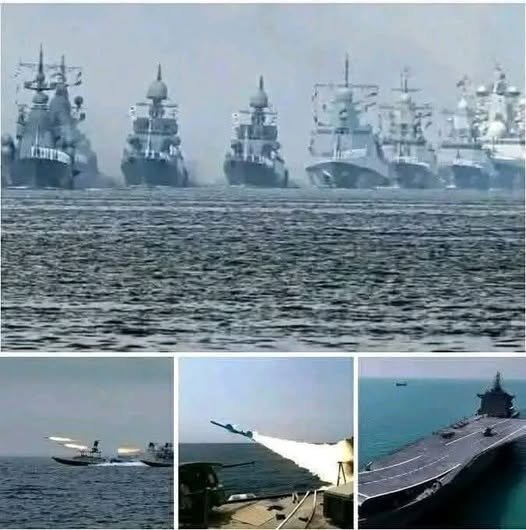
Rumors spread faster than facts in today’s digital world, and the current wave of online chatter is a perfect example of that reality. Across social media platforms, alarming posts and dramatic headlines are suggesting that the United States has “entered a new war,” fueling a storm of panic, outrage, and confusion that moves rapidly from one feed to another. In this environment, emotion often travels faster than evidence, and uncertainty can easily be mistaken for confirmation.
But beneath the noise, the situation is far more complex—and far less sensational—than the viral narratives suggest. Rather than a sudden shift into a formally declared war, what is actually unfolding is a tense and carefully managed period of global instability shaped by diplomacy, limited military actions, economic pressure, and ongoing negotiations. The surface-level chaos seen online often obscures the slower, more deliberate mechanisms of international decision-making that continue to operate in the background.
In reality, the United States is navigating a series of interconnected geopolitical challenges without crossing the threshold into a new declared war. In the case of Ukraine, for example, U.S. involvement is largely expressed through military aid, financial assistance, sanctions, intelligence sharing, and diplomatic coordination with allies—rather than direct combat engagement on the battlefield. At the same time, diplomatic channels remain active in multiple regions, including indirect and trilateral discussions involving Russia and Ukraine in neutral venues such as the United Arab Emirates, as well as ongoing indirect communication efforts involving Iran facilitated through intermediaries in Oman. These developments highlight an important but often overlooked truth: even adversarial relationships still rely on negotiation frameworks, structured dialogue, and strategic restraint.
Modern conflict, unlike the traditional wars of the past, rarely begins with a single declaration or a clearly defined starting point. Instead, it evolves gradually through a combination of limited strikes, cyber operations, proxy engagements, economic sanctions, information warfare, and political signaling. This blurred landscape makes it increasingly difficult for the public to distinguish between escalation, containment, and full-scale war. That ambiguity is precisely what allows misinformation to thrive online, where complex developments are often simplified into dramatic—but misleading—stories of immediate global collapse.
In such an environment, understanding nuance is not just an academic exercise; it is essential for maintaining perspective. The difference between escalation and outright war is not merely semantic—it determines how societies respond, how individuals interpret risk, and how fear spreads. When every incident is framed as the beginning of a global catastrophe, public perception becomes disconnected from reality, and anxiety can escalate even when diplomatic efforts are actively working to prevent broader conflict.
Ultimately, in a hyperconnected world where information spreads instantly and interpretation often outruns verification, clarity becomes a form of stability. The ability to pause, analyze, and separate verified developments from speculative narratives is one of the most important tools for navigating modern geopolitics. Without it, noise overwhelms understanding—but with it, even the most complex global events can be seen in their proper, more measured context.