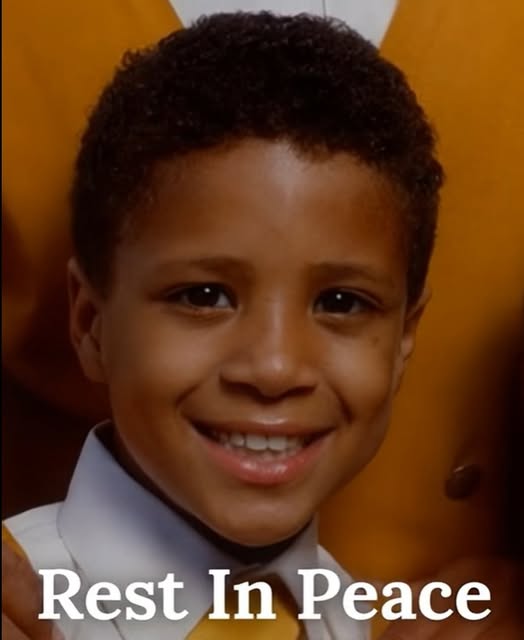
His heart didn’t simply stop. It was taken—quietly, almost mercifully—after a lifetime of giving itself away piece by piece to everyone else who needed it more than he did. Not by fame that fades or scandal that consumes, but by something far more invisible and far more ruthless: the silence that settles in a man’s chest when he has spent decades being the structure that holds everyone else upright, never once asking to be held in return.
He had survived three warnings from his own body—three moments when life itself tapped him on the shoulder and told him to slow down, to rest, to choose himself for once. But he never learned the language of stopping. Instead, he translated each warning into something useful: into fatherhood that never clocked out, into brotherhood that never turned away, into a quiet kind of service that asked for nothing and still gave everything. Every second chance became another reason to show up for someone else. The fourth warning didn’t feel like a warning at all. It felt like an ending written in a language even he could no longer translate.
Long before his final breath, he had already stepped out of the spotlight the world thought defined him. But in truth, he never left the stage of life where it mattered most. While the world chased breaking news, viral moments, and the next distraction, he lived in the spaces no one posts about. He fixed sinks in apartments where no one else came back to help. He answered late-night calls from men who had nowhere else to admit they were falling apart. He packed lunches not for applause, but for children who needed to feel seen in the smallest, most consistent ways. And in quiet rooms with mismatched chairs and tired eyes, he built circles where honesty wasn’t encouraged—it was required. Where masks came off. Where pain was finally allowed to breathe.
The boy who once played someone else’s son on-screen—learning lines that weren’t his and emotions written for him—grew into a man who no longer needed scripts. Life became his real performance, except there was nothing artificial about it. He became the one others leaned on when their own strength failed. He taught fathers how to stay when leaving felt easier. He taught men how to feel when feeling had been trained out of them. He taught, most of all, that surviving another day sometimes begins with a single honest sentence spoken out loud in the dark.
And then, without warning, his heart finally gave out.
The shock did not arrive as a single moment—it spread, slowly and painfully, like ripples that refuse to stop widening. First came his children, who had always known his tenderness even when the world only saw his strength. Then the men who had leaned on him in their lowest hours, who had learned how to breathe again because he had once stayed on the phone a little longer than he had to. Then the wider community, who suddenly began to understand that the stability they had taken for granted had been quietly built by a man who never asked to be recognized for it.
In the end, his legacy is not written in reruns, headlines, or applause that fades with time. It lives in the men who didn’t give up because he picked up the phone. It lives in the fathers who stayed one more day. It lives in the quiet courage of people who learned, through him, that strength is not the absence of breaking—but the decision to keep showing up anyway.