She didn’t stop to think. There was no space for thought anymore—only instinct, only panic, only the overwhelming, deafening certainty that something was terribly wrong. She ran.
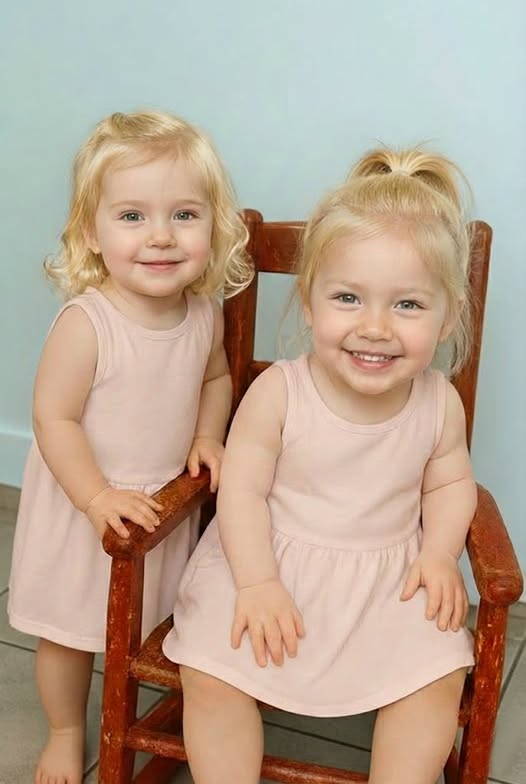
Bare feet slapped against the ground as she burst through the doors, her breath torn apart by fear. In her arms, she held two tiny bodies—so small, so fragile it felt impossible they could carry the weight of what was happening. Their skin looked wrong. Their movements weaker than moments before. Their lungs fought for air that didn’t seem to come. Their eyes, once bright with life, were now slipping into a frightening distance she could not reach.
The firefighters inside froze for half a heartbeat.
Then everything changed.
The bored rhythm of routine shattered instantly, replaced by something sharper—alarm, urgency, disbelief. The expressions on their faces transformed as they took in the scene: a woman shaking violently, barefoot, clutching two unresponsive infants, screaming without even realizing she was making a sound.
Sirens that had already been distant suddenly felt closer, louder, more urgent—as if the world itself had realized something irreversible was unfolding.
“Move—clear space!” someone shouted.
Hands were suddenly everywhere—careful, trained, but trembling with a human edge that training could never fully erase. Oxygen masks appeared. Radios crackled violently to life. Emergency calls were made in rapid bursts. Medics were summoned with urgency that carried weight no one needed to explain aloud.
No one in that room knew exactly what had caused it. No one had answers. Only the terrifying certainty that time had turned against them, and every second now mattered in a way seconds usually never do.
And still—beneath all the chaos—there was her.
Holding on.
Refusing to let go.
In the days that followed, the station could not forget.
Even during quiet shifts, when calls were few and the air felt still again, the firefighters found their thoughts drifting back to that moment. They replayed it in fragments: the sudden crash of the door opening, her barefoot steps on cold ground, the way her hands trembled so violently it looked like she might collapse—but didn’t.
They spoke about it in low voices, as people do when something has brushed too closely against the edge of tragedy. How close it had been. How easily those seconds could have stretched just a little longer… and changed everything. Two tiny lives, reduced to white sheets instead of the fragile recovery now unfolding in hospital rooms.
For all their training, all their discipline, all their readiness for emergencies—they admitted something quietly among themselves:
It wasn’t their protocol that turned the tide.
It was her.
A mother who didn’t freeze. A mother who ran straight into the storm when every instinct should have told her to stop.
She, however, never accepted praise.
In the hospital room, she sat between two small beds that felt far too large and far too silent. Monitors blinked steadily, counting out proof of life in soft electronic rhythms. She watched their chests rise and fall, each breath a fragile negotiation with fate.
Sleep did not come easily. Relief did not come fully either. Instead, there was something heavier—an echo of those terrifying minutes when everything had nearly been taken from her without warning.
Doctors spoke in careful, uncertain language afterward. No single cause. No clear villain. Only possibilities—hidden triggers, unpredictable reactions, the kind of medical mystery that leaves more questions than comfort.
But none of that mattered to her the way people expected it to.
What stayed carved into her mind wasn’t the diagnosis.
It was the moment before it.
The realization that life can tilt so suddenly, so violently, that survival is sometimes decided not by knowledge or strength—but by a single, desperate choice to move when the world is falling apart.
And she had moved.