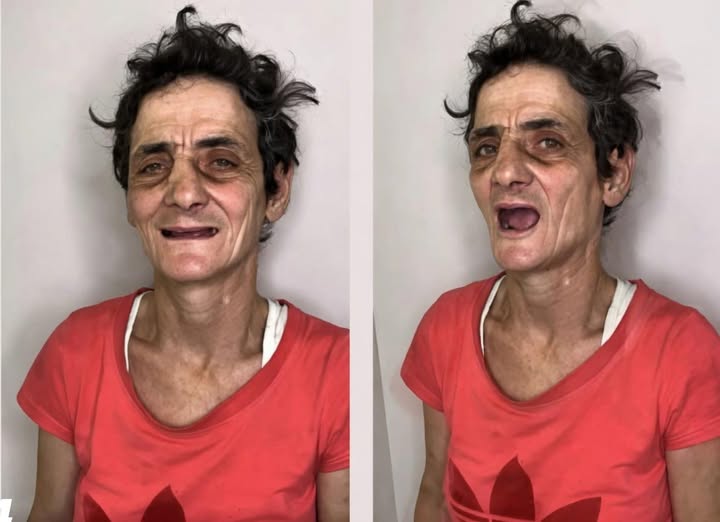
Rita had already lost everything. Her son was gone, taken by circumstances she could neither control nor undo. Her home, once filled with memories of laughter and warmth, had been reduced to ashes—or in the cruelest sense, erased by the indifference of the world. Her place in society, that fragile sense of belonging, had dissolved like mist at dawn. For years, she moved through the city streets as if she were invisible, a ghost among the living. She collected bottles to scrape together pennies, her hands raw from cold and labor, her eyes trained downward while the world walked past without notice.
Then, one day, something extraordinary happened: someone saw her. Truly saw her. Not with pity, not with the mechanical gestures of charity, but with a recognition that she was still a person—a human being deserving of dignity. The change did not come in grand gestures or sensational headlines. It began in quiet, intimate acts: a dentist’s chair that was more than a seat, a careful hand brushing through her tangled hair, nails meticulously cleaned and painted, each stroke a small affirmation. Each moment whispered what no one had said to her in years: you still matter. For a woman who had been rendered disposable, this message was revolutionary.
Rita’s transformation was not a sudden erasure of her grief. Her sorrow remained, etched into the lines of her face, shadowing her thoughts. But alongside it, a fragile, daring possibility began to take root. Her reflection in the mirror softened; she began to see someone she recognized, someone capable of being seen. She straightened her posture, lifted her chin, met the gaze of passersby with quiet courage. Slowly, she allowed herself to imagine not merely surviving on the margins of life, but participating in it again—imagining a place in a world that had long ignored her.
Rita’s story is a testament to the extraordinary power of small, human gestures. It shows how the line between belonging and abandonment can be almost imperceptibly thin, and yet how a single act of genuine recognition and care can pull someone back from the edge. This is not a story of miracles or spectacle—it is a story of stubborn, relentless humanity, of the way dignity, when offered sincerely, can reclaim a life. It reminds us that sometimes the most profound change does not come from fixing someone, but from seeing them.