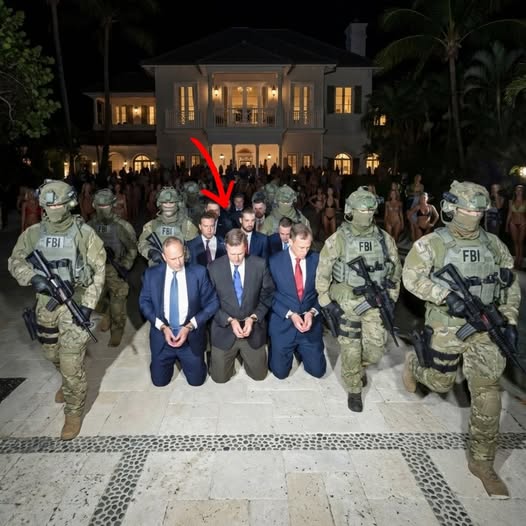
Katia should have died in that storm. The waves had torn at her, relentless and merciless, and yet somehow she survived—crawling from the ocean like a wounded ghost, an arrow lodged deep in her shoulder, her clothes shredded, her body trembling with exhaustion and shock. What she carried in her veins was more than pain; it was a story that no one wanted to hear. A story of a private island shrouded in secrecy, of wealthy men wielding guns as casually as knives, and of women—beautiful, terrified women—granted a fleeting head start before being hunted as if they were nothing more than prey.
For years, it had been whispered about in fearful tones, dismissed as an urban legend. But then a single photograph appeared in a newspaper—a face Katia knew all too well—and everything shifted. The myth had a name. The island had coordinates. The hunt, once a dark fantasy whispered in shadows, was now unmistakably real, and the predator’s game had turned deadly in ways no one could ignore.
When the tactical boats sliced through the dense morning fog, carrying armed officers toward that hidden nightmare, Katia’s terror had already been meticulously cataloged in her mind. Every memory, broken and jagged as it was—the kennels where dogs had waited, the buzzing drones that tracked movement like mechanical vultures, the cold, unfeeling gaze of thermal scopes—became a blueprint for rescue. Officers moved through the wet underbrush along paths she had stumbled across barefoot, paths marked by desperation and blood, following the imprint of a woman who had run for her life while the island itself seemed to conspire against her.
And underground, beneath the weight of the forest and the lies, they found it: the cramped cells she had begged to be believed, the tracking bracelets glinting under the dim lights, a wall of monitors where human terror had been commodified and broadcast like some grotesque spectacle. It was worse than she remembered. It was exactly as she had sworn it existed.
The women who emerged from that darkness were not props in someone’s sadistic fantasy—they were survivors, each step into the daylight a small rebellion against the fear that had been imposed upon them. Some collapsed into the arms of medics, shivering and silent, others kept their eyes wide and vigilant, still attuned to phantom footsteps behind them. And Katia—once ignored, once doubted—watched from a hospital window as her name was spoken aloud with reverence on television, her truth finally acknowledged instead of questioned.
The empire of the billionaire who had orchestrated this cruelty began to unravel, piece by piece, document by document, testimony by testimony. What had been dismissed as impossible, as an exaggeration of a terrified imagination, became a landmark case, proof that no fortress—no matter how gilded, no matter how protected—can shield brutality from exposure when someone refuses to remain silent. Katia’s story, born from the edge of death and the depths of terror, became a reckoning. The hunted had survived, and the predators were finally on trial.