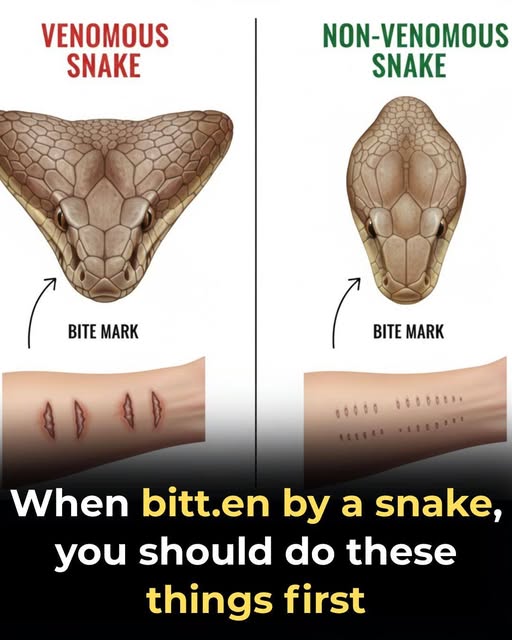
It happens in a matter of seconds—no warning, no chance to prepare. One moment you’re walking through grass, working in a field, or enjoying the outdoors. The next, a sudden flash of pain cuts through your body like fire. You look down and see it: two puncture marks, swelling skin, and a fear that arrives even faster than the pain itself.
Your heartbeat spikes. Your thoughts scatter. Panic takes over almost instantly—and in those first 60 seconds, what you do next can change everything. Many people make critical mistakes in fear. Some try to run. Others try to fight the pain. A few freeze completely. But in a snakebite emergency, those instinctive reactions can make the situation far more dangerous.
A snakebite is not just a wound—it can be a medical race against time. If venom is involved, movement accelerates its spread through the bloodstream. That is why staying as still as possible is essential. The victim should be kept calm, reassured, and prevented from unnecessary movement. Even small actions like walking or struggling can push the venom further through the body.
The safest immediate response is controlled, deliberate action. Move the person away from the snake if needed, but avoid overexertion. Lay them down gently and keep the bitten limb immobilized—preferably at or slightly below heart level. Remove anything tight such as rings, watches, or bracelets before swelling begins, because swelling can escalate quickly and trap circulation.
Just as important is what not to do. Many dangerous myths still cause harm today: cutting the wound open, attempting to suck out venom, applying ice, or using a tourniquet. These methods do not help—and can significantly worsen tissue damage or complications.
While first aid is crucial, the most important step is urgent medical care. Emergency services should be contacted immediately, or the person should be transported to the nearest hospital without delay—even if symptoms appear mild at first. Snake venom effects can be unpredictable and may intensify suddenly after a period of delay.
Until help arrives, keep the person warm, lying still, and closely monitored. Watch for changes in breathing, speech, alertness, or swelling progression. Speak calmly. Reduce fear. Keep them as still and stable as possible.
In the end, survival often depends less on panic and more on precision. Calm thinking in the first moments doesn’t just improve outcomes—it can be the difference between a full recovery and a preventable tragedy.