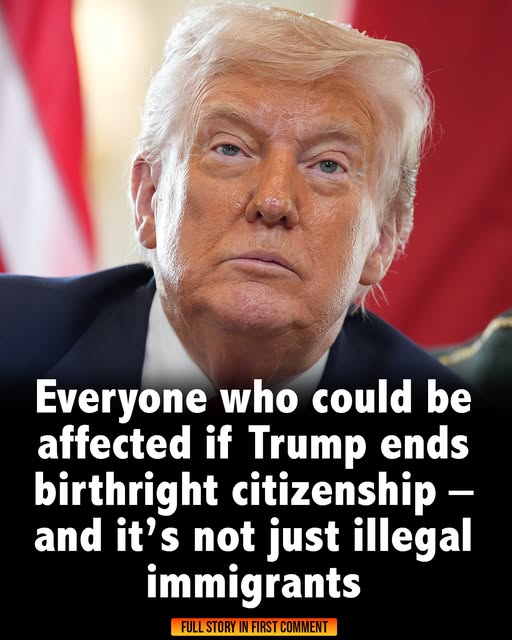
A single political move landed like a shockwave across the country—sudden, loud, and impossible to ignore. With one executive order, uncertainty spread through millions of households almost overnight. What began as a policy debate quickly turned into something far more personal: questions about identity, security, and belonging in the only country many people have ever known.
At the center of the storm is the idea of birthright citizenship, a principle rooted in the 14th Amendment and embedded in American life since 1868. For more than a century and a half, its message has been simple and powerful—if you are born on U.S. soil, you are recognized as American. That promise has served as a legal and emotional anchor through wars, political divisions, and waves of immigration.
Now, that long-standing guarantee is being challenged in a way that feels unprecedented. The proposed shift does not only touch those who cross borders without documentation. Its reach extends far wider, into immigrant families building new lives, international students pursuing education, skilled professionals working in tech and healthcare, and even visitors who happen to give birth while temporarily in the country. In every case, the question becomes the same and deeply unsettling: what defines who belongs?
Across communities, the uncertainty is already taking shape in quiet but profound ways. Parents worry about what status their children might hold in the future. Expectant families reconsider plans for hospital visits. Students and workers on temporary visas find themselves questioning whether long-term dreams in America are still secure. Even children born in the United States—who have always believed their citizenship was automatic and unquestionable—could one day find that assumption challenged by legal reinterpretation.
At the heart of it all lies a looming constitutional confrontation. Supporters of the existing interpretation argue that the text of the 14th Amendment is clear and enduring, protecting citizenship for nearly all born in the country regardless of parental status. Opponents, however, push for a narrower reading, insisting the law has been misunderstood or misapplied in modern contexts. That clash is now poised to be tested in the courts, potentially culminating in a landmark Supreme Court decision.
Legal voices, including attorneys general such as William Tong, maintain that the Constitution leaves little room for ambiguity. Yet beyond the courtroom language and political rhetoric, there is a more fragile reality taking shape—one defined by anxiety and uncertainty. Policies and statements have already stirred fear in many communities, reminding the nation that even long-standing rights, once thought immovable, can become central battlegrounds in moments of political upheaval.
What was once considered settled history is now being pulled back into debate, and millions are left waiting—watching the courts, the lawmakers, and the future of a promise that has defined American identity for generations.