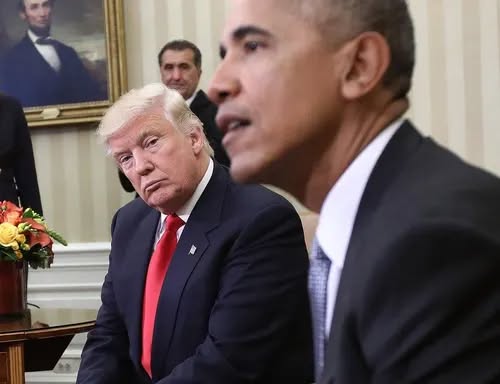
The room fell silent in a way that felt heavier than words—like everyone in it understood, at the same instant, that something had just shifted beyond easy repair. Within minutes, those few sentences attributed to Barack Obama were no longer just remarks; they became a cultural detonation, racing across social media feeds, cable news banners, podcast debates, and the tense, half-whispered arguments of family group chats. There was no neutral reading left in the public square. Every listener seemed forced into a corner: either this was a necessary warning in defense of democracy itself, or it was a dangerous accusation from a former president aimed at millions of ordinary voters.
For his supporters, the intent was clear and even urgent. They saw not contempt, but caution. In their view, Obama was drawing a line in the sand around the fragile architecture of democratic life—elections, peaceful transfers of power, shared rules of legitimacy. To them, his words were less an attack on people and more a defense of the system that makes political disagreement possible in the first place. If those foundations are eroded, they argue, then every vote, every outcome, and every institution begins to lose meaning. From this perspective, naming threats to those foundations is not exclusion—it is an act of preservation.
But to his critics, the message landed very differently. They heard something sharper, something more personal: the suggestion that skepticism itself had become disqualifying. In their interpretation, questioning election integrity, challenging dominant narratives, or distrusting institutions was being reframed not as participation in democracy, but as proof of hostility to it. That framing, they argue, turns political disagreement into moral condemnation—dividing citizens not just by opinion, but by legitimacy.
And that is where the deeper tension lies. Beneath the outrage and counter-outrage is a paradox that modern democracies struggle to escape: the more fiercely each side claims to be defending democracy, the more fragile democracy begins to feel. When one side believes it is protecting the system from collapse, and the other believes it is being cast out of that very system, the shared space required for democratic life starts to shrink.
A democracy does not collapse only through dramatic rupture; it erodes through accumulated suspicion—when opponents are no longer just wrong, but unworthy. It survives not because everyone agrees, but because everyone still accepts that losing an election is painful without being proof of exile.