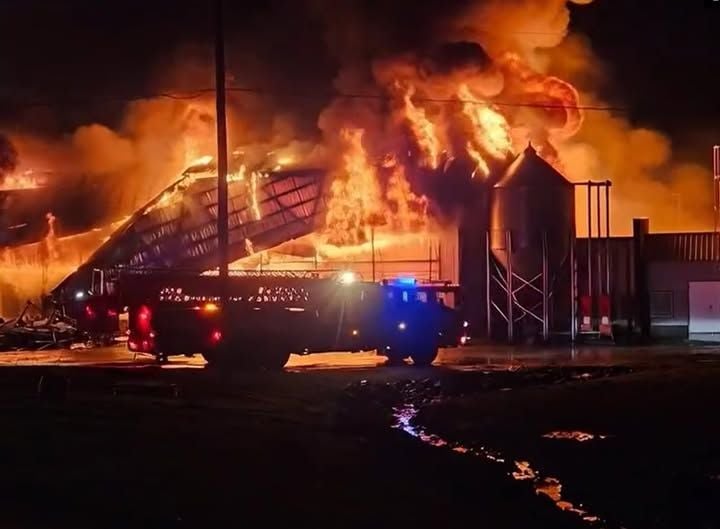
Sirens cut through the air, but they did nothing to stop what was already unfolding. Within minutes, what had begun as an ordinary Saturday in Pamplona Alta turned into a scene of chaos—an overwhelming surge of flames, thick black smoke, and panic that spread faster than anyone could react. Families rushed into the streets with only what they could grab in their hands. There was no time to think, no time to plan—only the instinct to survive.
One moment, homes stood tightly packed together, full of everyday life. The next, entire rows were swallowed by fire. Wooden walls collapsed, corrugated metal twisted under the heat, and the narrow streets glowed an eerie, unbearable red. People shouted for neighbors who could no longer be seen through the smoke. Children cried as parents tried to shield them from sparks falling like burning rain. The neighborhood, once familiar and alive with routine, became unrecognizable in a matter of minutes.
When the fire finally moved on, it left behind a silence heavier than the sirens that had tried—and failed—to contain it. Streets were unrecognizable, lined with ash and debris. What remained of homes was reduced to skeletal frames and melted fragments of daily life. In the aftermath, families gathered wherever they could find space—temporary shelters, tents, and makeshift corners of safety—clinging not only to each other but to the fragments of what they had managed to save.
But the loss went far beyond physical structures. Residents now sift through the emotional wreckage of what disappeared in the flames: medical prescriptions needed for survival, school uniforms carefully prepared for children’s futures, legal documents that took years to secure, and photographs that can never be replaced—faces of loved ones now preserved only in memory. Each missing item carries a story, and each story adds another layer of grief to an already devastated community.
As investigators begin examining the possible role of illegal pyrotechnics and authorities coordinate emergency aid, deeper questions refuse to fade. This was not simply a fire sparked in a single moment of carelessness. It appears instead as the outcome of years of accumulated risk—of fragile housing conditions pressed tightly together, of limited oversight, and of hazardous activities allowed to exist in the shadows until it was too late.
Now, amid the smoke that still seems to linger in memory, recovery feels like a task far greater than rebuilding walls and roofs. It is about restoring stability where everything collapsed at once. It is about rebuilding trust between residents and the systems meant to protect them. And it is about confronting the uncomfortable truth that without lasting change, the conditions that allowed this disaster to erupt may still be waiting—silent, hidden, and ready for the next spark.