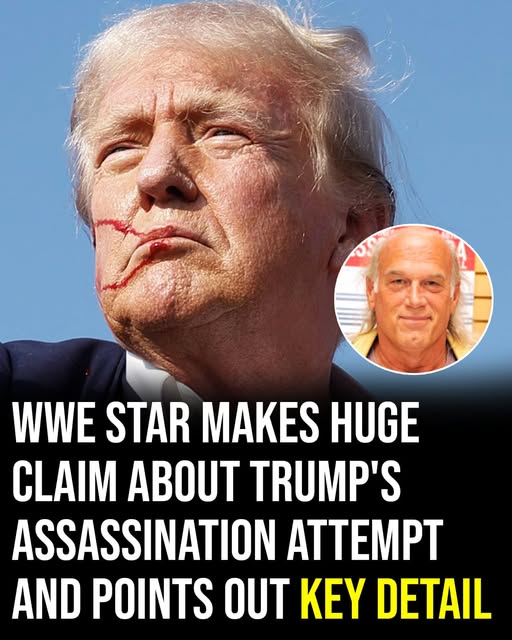
The wound was real. The blood was real. The terror—sharp, immediate, impossible to deny—cut through the noise of a nation already on edge. For a brief moment, everything felt brutally clear. And then, just as quickly, that clarity fractured.
Into that fracture stepped Jesse Ventura, hurling a theory that landed not as a question, but as an explosion. In a tense, unblinking exchange with Piers Morgan, the former governor and wrestling icon suggested that what the country had witnessed—the near-fatal shooting of Donald Trump at a rally—might not be what it seemed. He invoked the language of the ring, calling it a possible “blade job,” a term from scripted wrestling used to describe self-inflicted bleeding designed to heighten drama.
The effect was immediate and jarring. Ventura’s words didn’t just question an event—they collided with it. They pulled the vocabulary of staged spectacle into a moment marked by chaos, gunfire, and loss. A man was killed. Others were left critically wounded. A former president stood bloodied before being rushed offstage by security. For many Americans, this was not a narrative to be dissected—it was a tragedy to be mourned.
And yet, Ventura’s comments sliced straight through that grief, reframing it in a way that felt, to many, not just skeptical but deeply unsettling. It was as if the pain of those who were there—the witnesses who ran, the families who lost someone, the supporters who watched in horror—had been reduced to a script, a performance, a question mark.
The backlash was swift, but the moment lingered. Because beneath the outrage, something else was exposed—something quieter, but far more troubling.
Ventura didn’t create the doubt. He revealed it.
His outburst tapped into a current running deep through the American psyche: a growing, almost reflexive distrust of institutions, of official explanations, of anything presented as settled truth. The investigation has been conducted. The Federal Bureau of Investigation has closed its case. Authorities insist the evidence is clear, the conclusions firm.
But certainty, it seems, no longer guarantees belief.
Instead, voices like Ventura’s find oxygen in the gaps—real or perceived—between what is said and what is trusted. They keep the wound from closing, not by disproving facts, but by casting just enough shadow to make those facts feel fragile.
And that leaves the country with a question far more unsettling than any single theory:
If even blood, even death, even a moment of shared shock can be pulled into doubt—what, if anything, is left that everyone can believe?
Because a nation can endure violence. It can grieve, rebuild, and remember. But when belief itself begins to fracture—when every truth is met with suspicion, every tragedy with speculation—the healing becomes something else entirely.
Not impossible.
But uncertain.