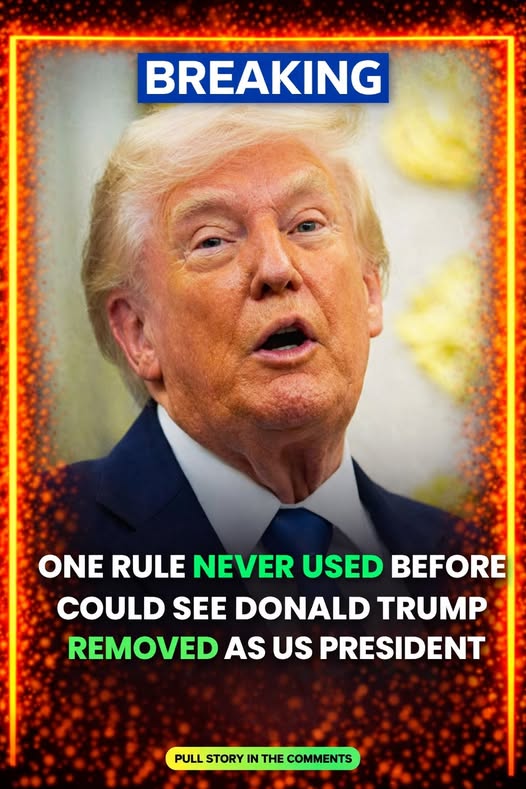
A single suggestion, whispered from inside the conservative world itself, has detonated into something far more dangerous than a headline. In a moment already stretched thin by airstrikes, rising threats from Iran, and a White House consumed by internal conflict, the unthinkable has been placed on the table. Not impeachment. Not resignation. Something far more abrupt, far more destabilizing.
A constitutional switch that has never truly been flipped in the heat of crisis.
At the center of it stands JD Vance, a vice president now being urged to consider an option that exists more in theory than in history. The target: Donald Trump. The mechanism: the Twenty-fifth Amendment to the United States Constitution. And the stakes? Nothing less than the immediate transfer of presidential power in the middle of a global flashpoint.
The voice behind the call, Scott McConnell, isn’t speaking as an outsider throwing stones. He’s speaking as someone from within the ideological walls—someone who now claims those walls are cracking. For him, this is no longer about party, loyalty, or political calculation. It’s about urgency. About a belief that decisions being made at the highest level are steering the United States toward a confrontation that cannot be undone. He frames it starkly: intelligence he dismisses as unreliable, risks he sees as reckless, and a president he believes is pushing too far, too fast.
His proposal reads like a political thriller, but its blueprint is entirely real. Convince the cabinet. Secure their agreement that the president is unfit to discharge the duties of the office. Deliver the letter to Congress. And in that instant—without a vote from the public, without a campaign, without even a resignation—power shifts. JD Vance becomes acting president. The chain of command changes mid-crisis. The world recalibrates overnight.
But nothing about this path is clean.
The moment that letter is sent, the clock starts ticking. Donald Trump could reject the declaration immediately, triggering a constitutional standoff that forces Congress into one of the most consequential votes in American history. Lawmakers would be asked to decide—under the pressure of unfolding international conflict—who truly holds presidential power. Not in theory, not in calm deliberation, but in real time, as decisions carry consequences far beyond Washington.
And beyond America’s borders, every move would be watched, measured, and exploited.
Signals from Iran suggest a calculated awareness of the moment, even a preference for dealing with JD Vance—a figure whose military background hints at caution where others might see escalation. But such perceptions only deepen the tension. Any shift in leadership now wouldn’t just reshape domestic politics; it would ripple instantly across alliances, battlefields, and diplomatic backchannels.
At home, the fracture could be just as severe. A move like this wouldn’t unify the country—it would split it down the middle, forcing Americans to confront a question few ever expected to face: what happens when the Constitution is pushed to its edge not in peacetime, but in the shadow of war?
This is the gamble embedded in McConnell’s call. Not just whether the mechanism works, but what it unleashes. A decisive correction—or a cascading crisis.
Because if that letter is ever written, it won’t simply transfer power.
It will test the limits of the American system in front of the entire world—and determine whether this moment becomes a turning point… or the moment everything starts to break.