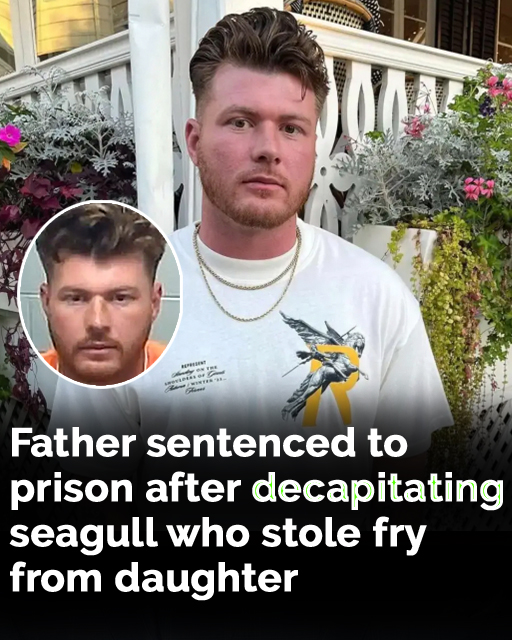
A quiet afternoon at the shore shattered in an instant.
Sunlight bounced off the water, laughter drifted along the boardwalk, and families moved in easy rhythms between food stands and ocean views. Then, without warning, the scene twisted into something unthinkable. A father, in full view of children and tourists, grabbed a seagull—and in a moment of shocking violence, tore its head from its body. The sound of joy was replaced by screams. Parents scrambled to shield young eyes. Bystanders stood frozen, caught between disbelief and horror.
And now, in the aftermath, the man at the center of it all is not behind bars.
No prison sentence. No cell. Instead: probation, mandated treatment, and a fine so small it feels almost symbolic—less a punishment than a footnote. For many who witnessed the act, or have since heard about it, that outcome lands like a second shockwave. The brutality was immediate, undeniable. But the consequences? To some, they feel distant, muted, almost unreal.
What happened on that Jersey Shore boardwalk didn’t end with the seagull’s death. It lingers—in the minds of children who saw something they can’t unsee, in the uneasy silence that follows when a line feels crossed but not fully acknowledged. It lingers in the questions parents now have to answer, trying to explain how something so violent could happen so suddenly… and why it seems to carry so little weight afterward.
Supporters of the sentence argue that justice isn’t always about punishment. They point to recovery court as a path that looks deeper—beyond the act itself, into the causes behind it. Addiction, instability, untreated issues—factors they believe should be confronted, not ignored. To them, this isn’t leniency. It’s an attempt to prevent something worse in the future.
But for many others, that reasoning fractures under the sheer brutality of what occurred.
Animal advocates see more than a single act—they see a precedent. A signal. They worry about what it means when extreme violence toward a defenseless creature, carried out publicly and without hesitation, is met with consequences that feel, to them, insufficient. Parents, too, are left unsettled—not just by what their children witnessed, but by what it might suggest about accountability, about where society draws its lines.
Because in the end, this wasn’t just about one man and one act.
A life was taken—violently, senselessly.
A crowd was shaken—some deeply, perhaps permanently.
And a justice system made a choice.
Rehabilitation over retribution. Mercy over severity.
Now, the public is left to wrestle with a difficult question:
Was this justice with foresight… or a miscalculation that risks sending the wrong message at the worst possible moment?