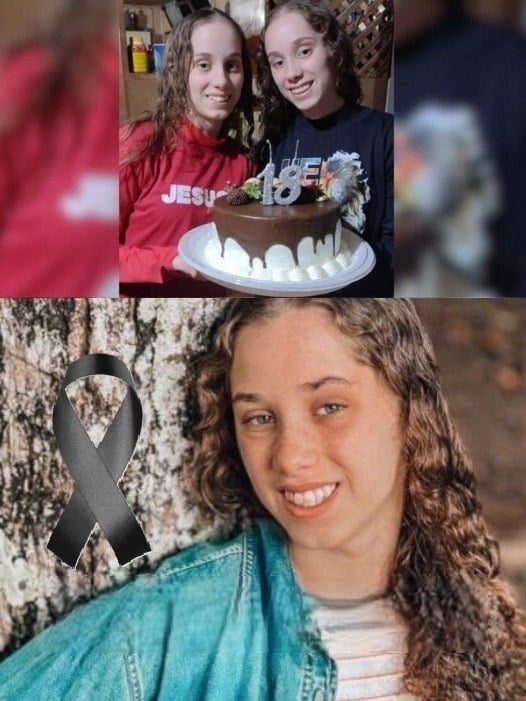
The hope didn’t fade slowly—it broke, all at once, in the sharp, unforgiving ring of a phone call. For days, an entire community held its breath, clinging to the fragile belief that 18-year-old twins Carolina and Luiza would somehow find their way back home. Every passing hour was heavy, but still carried a flicker of possibility. Until it didn’t. In an instant, that fragile hope collapsed into something far colder—a silence that now hangs over everything. The questions haven’t stopped. If anything, they’ve multiplied. Rumors ripple through conversations and screens alike, each one darker than the last. And somewhere beneath it all lies a truth that feels almost too heavy to face.
When Carolina and Luiza were found in a remote, lonely stretch of land, the news didn’t just travel—it stunned. It left an entire city suspended in a painful space between grief and disbelief, where reality feels distant and unreal. Just days earlier, their faces had been everywhere—shared across social media, printed on posters, carried in the hands of volunteers who refused to give up. Strangers became searchers. Neighbors became family. Hope became a collective act of defiance. And yet, it all led to the ending no one dared to say out loud.
Now, the scenes have changed in the most heartbreaking way. Where there should have been relief, there is mourning. Where there should have been embraces, there are tears that don’t seem to stop. Inside the family’s home, the unimaginable task has begun—not planning a welcome back, but choosing photographs for memorials. Each image a memory. Each memory a reminder of laughter, of shared childhood moments, of two lives intertwined in a way only twins can understand. It is a kind of pain that resists explanation, a grief so deep it feels almost wordless.
Meanwhile, investigators move with quiet precision, stepping carefully through the fragments left behind. They trace timelines, revisit the smallest details, and examine the place where everything came to an end, searching for answers that might bring even a sliver of clarity. Autopsy results are awaited, not just as procedure, but as a painful doorway into understanding the sisters’ final moments. Officials promise that nothing will be ignored, that every question will be pursued—but patience is hard to hold onto when the loss feels so immediate, so raw.
Outside, the community has found its own language for grief. Candles flicker in public squares, their soft light pushing back against the darkness, if only for a moment. Flowers gather in quiet piles. People speak in hushed voices, as if anything louder might shatter what little composure remains. In those small, shared acts, there is a collective promise forming—one that goes beyond anger, beyond fear. Carolina and Luiza will not simply become another story that fades with time. They will be remembered as they were: two bright, vibrant lives, deeply loved, endlessly connected, and taken far too soon.
And as the days pass, one truth settles heavily over everything: while answers may come, they will never be enough to fill the space left behind.