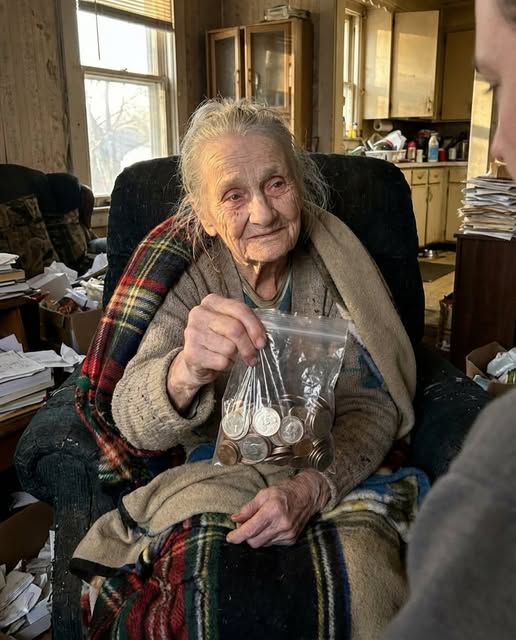
The accusation landed with the weight of winter ice, sharper and colder than any gust outside. It came in a voice fragile as a whisper, trembling yet undeniable: “This is your fault.” Four words. Four words that splintered certainty, fractured intention, and sent a flood of doubt surging through every carefully made choice. For a heartbeat, I couldn’t breathe. Every action that had felt right—every small attempt to help—suddenly seemed suspect, a potential harm I had wrought despite my best intentions. The world around me blurred: neighbors leaning in with knowing eyes, the distant wail of sirens, and the banal object that had started it all—a simple pizza delivery—transformed into a moral labyrinth I could not escape.
I remember the heaviness of her home that day, a weight denser than the winter air pressing against the windows. The scent of candles mingled with the chill, their flames quivering as if in sympathy with the unease. She counted her coins with hands that shook, each one a testament to a life carefully measured, where every dollar mattered. I had walked away without taking payment, convinced it was the right thing to do, yet called for help because it seemed necessary—because doing nothing felt worse. But under the sudden sting of her accusation, the certainty of that choice began to crumble. Every step, every word, every gesture replayed in my mind like a film I could not pause, each frame loaded with questions: Had I overstepped? Had I exposed her vulnerability under the guise of care? Or had I betrayed her trust, stripping dignity from her in the name of concern?
A week later, I returned to her home, bracing for confrontation, for anger, for resentment thick enough to fill the room. But the house that had felt so heavy before now pulsed with light and life. Windows thrown open to catch the sunlight, counters stacked with groceries and small comforts, the kitchen alive with neighbors chatting, cooking, moving as though they’d always been part of that space. And there she was, standing in the doorway, eyes meeting mine—not with blame, but with quiet gratitude. Her soft, almost whispered “thank you” cut through the lingering guilt and fear like sunlight through frost.
It didn’t erase the doubt that had gnawed at me, nor did it make the fear of having done harm disappear. But it reframed everything. Sometimes, the right choice feels wrong because we are too close to the edges of someone else’s pain to see the full picture. The courage to act—to intervene, to care, to risk misunderstanding—is often messy, fraught with tension, and at times even hated. Yet with distance, perspective, and time, the truth emerges: real care is rarely simple, and the most meaningful acts are those that risk discomfort for both giver and receiver. What once felt like interference had been kindness; what felt like error was, in fact, courage veiled in the shadow of doubt.