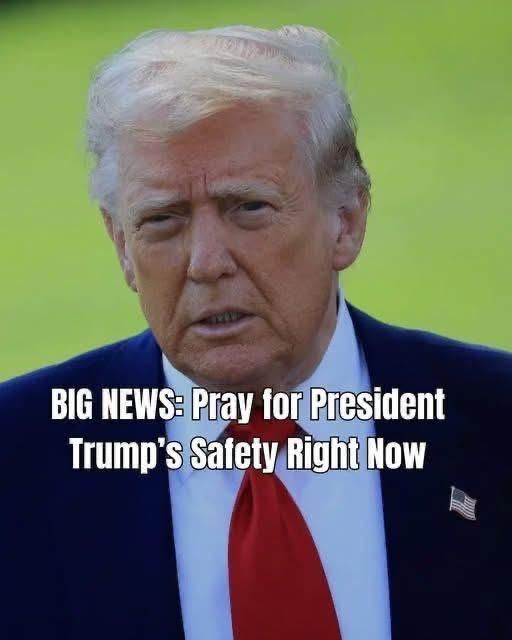
The moment the indictment dropped, something deeper than headlines shifted—it felt as though the very ground beneath American politics cracked open. A former president, Donald Trump, now stood not behind a podium but before a court, recast in the stark, unfamiliar role of criminal defendant. The charges were not trivial, nor were they distant echoes of past controversies. They cut to the core of the system he once led—allegations of conspiring against the very democratic framework he had sworn, hand raised, to defend.
Almost instantly, the nation split along lines that had been hardening for years. To his supporters, this was the culmination of a relentless campaign—a “witch hunt” dressed in legal language, proof that powerful institutions could be weaponized against political outsiders. To his critics, it was something else entirely: a long-delayed reckoning, an assertion that no office, no matter how high, places someone beyond the reach of the law. Between those opposing beliefs lies a quieter, more unsettling question—one that slips past slogans and talking points: what happens when truth itself becomes contested terrain, and power is measured not just in votes, but in narratives people choose to believe?
This case is not confined to the actions of one man in the aftermath of a single election. It is, in many ways, a stress test for the durability of American democracy itself. The prosecutors describe a deliberate effort—words chosen carefully, pressure applied strategically, plans constructed to transform uncertainty into leverage. They argue that doubt was not an accident but a tool, shaped and sharpened to bend the system toward a desired outcome. The defense, however, will paint a radically different picture: one of protected speech, of a leader voicing genuine belief, however controversial, in a political environment defined by distrust and division. Intent, they will argue, is everything—and belief, no matter how mistaken, is not a crime.
Suspended between these two narratives is a jury tasked with an extraordinary responsibility. They are not only weighing evidence; they are navigating territory the law has rarely had to define so explicitly. Where does political advocacy end and criminal conduct begin? Can a president—any president—push against the limits of the system without breaking it? And if a line was crossed, how clearly was it drawn in the first place?
Yet even before a verdict is reached, the consequences are already unfolding. For millions of Americans, the justice system no longer appears as neutral ground but as contested space, shaped by ideology as much as by evidence. Trust, once eroded, does not return easily. And still, the process moves forward in the only way the Constitution allows: through open proceedings, examined evidence, argued interpretations, and the slow, methodical machinery of appeals and rulings. It is imperfect, often frustrating, but it is the framework designed to hold when everything else strains.
In the end, this trial will do more than assess the actions of a single figure. It will act as a mirror, reflecting the country back to itself. Not just what happened—but what people are willing to accept as truth, as justice, as legitimacy. The verdict, whatever it may be, will close one chapter. But the deeper story—the one about faith in institutions, in rules, in the fragile idea of democracy itself—will continue long after the courtroom lights go dark.