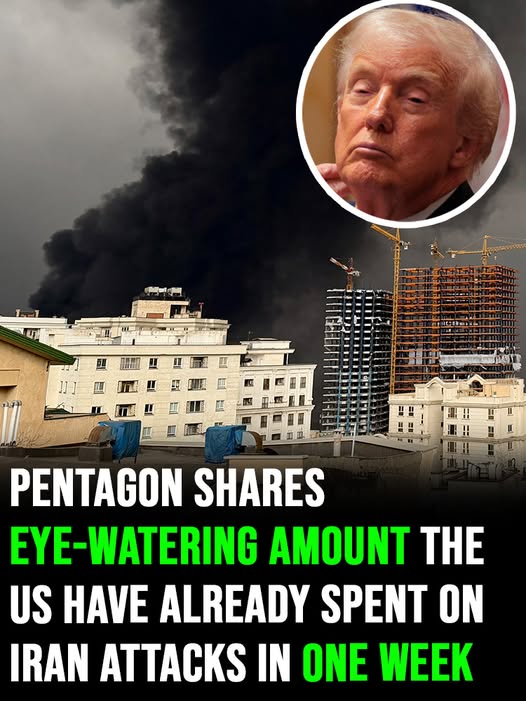
The cost is more than staggering—it’s almost incomprehensible. In just seven short days, the conflict with Iran has devoured billions of American tax dollars, leaving the nation with a tab that grows by the hour. Missiles streak across the sky, jets roar overhead, and troops are deployed in numbers that boggle the mind—all funded by citizens who may never see a tangible benefit from this expenditure. Meanwhile, everyday Americans feel the pinch: rising gas prices, creeping inflation, and the gnawing question that no politician seems to answer clearly: how much more are we willing to sacrifice for a war that seems to have no end in sight?
Experts estimate that the Iran campaign alone has already burned through roughly $6 billion in just one week. Of that, around $4 billion has been funneled into sophisticated weapons and missile systems—machines that disappear in an instant the moment they are launched. Each missile interceptor can cost millions, and when deployed by the dozens or hundreds, the money evaporates at a pace that seems almost surreal. On a daily basis, analysts say nearly $890 million is spent on direct operations alone—funds that were never anticipated in the federal budget, forcing lawmakers to scramble to reallocate resources and approve emergency spending.
The ripple effects reach far beyond the Pentagon. In Washington, the scramble to fund this war is reshaping budgets, delaying domestic projects, and sparking heated debates over priorities. At home, families are already feeling the impact: higher fuel bills, stagnant wages, and the rising cost of everyday goods. Critics warn that this could be just the beginning, echoing the aftermath of Iraq, which carried a staggering price tag of nearly $3 trillion—a number whose full weight became clear only years later.
For ordinary Americans, the conflict is no longer a distant headline; it is appearing in every monthly statement, every grocery bill, every visit to the pump. And as the costs mount, one pressing question dominates the national conversation: how far are we willing to go, and how much of our future are we prepared to trade for a war that seems to grow more expensive by the hour?