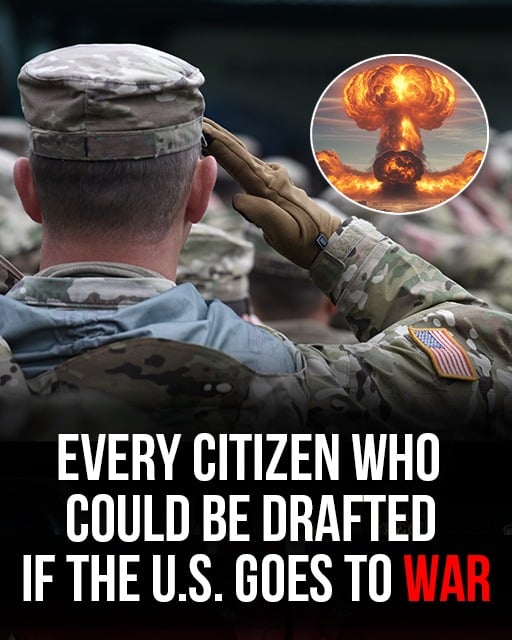
Fear is back.
Not the distant, abstract kind that flickers across a news ticker, but the kind that presses against your chest in the quiet moments: a low, relentless hum beneath everyday life. Across the globe, conflicts flare unpredictably—missiles streak through skies, naval exercises rattle distant waters, and whispered warnings of nuclear escalation creep from diplomatic briefings into the headlines of every morning paper. For Americans, a question long buried under decades of uneasy peace is surfacing once again: could the draft return?
Parents speak in hushed tones behind closed doors, their voices carrying the weight of histories they hoped their children would never inherit. Teenagers stare at calendars with a new, sharp awareness, calculating birthdays and imagining the randomness of fate. And the law itself is quietly reshaping the landscape: automatic registration for young adults, once a formality, could now become the first step toward an entirely new reality. Millions of names, silently logged, could be swept into a system that most understand only in vague, uneasy outlines.
If the draft were ever reinstated, it would not erupt in chaos or dramatic headlines. It would begin with the quiet, mechanical precision of bureaucracy. The Selective Service System would move silently, efficiently—from database to deployment. It would start with 20-year-olds, chosen according to birth year and lottery number, and gradually work its way outward through older men and finally younger. A single number, drawn in a televised lottery, could decide destinies: who returns home safely, who is sent into conflict halfway across the world.
Yet the system is not a monolith. It is riddled with exceptions, moral judgments, and agonizing gray areas. Medical histories are examined under a microscope, conscientious objections challenged, and family hardships weighed against the needs of the military. College students might find temporary reprieve; critical workers could be reassigned to roles far from the front lines. Women remain, for now, outside the reach of compulsory service—but the machinery itself waits, silent, dormant yet ready.
Officially, the United States is at peace, and no draft is planned. Unofficially, though, the apparatus lies in wait: a shadowed, patient force, closer to activation than many dare to admit. Fear, once considered a relic of Vietnam-era memory, has returned—not as a headline, but as a quiet, pervasive certainty, touching homes, schools, and hearts with the chilling question: who would be next?