The sea did not roar a warning. It simply changed.
One moment the water was dark and restless beneath a quiet sky, the next it was alive with violence. Metal twisted with a scream that cut through the night. Flames erupted where there should have been only waves. Within seconds, the ocean that had carried the ship became its tomb. More than eighty sailors were swallowed by black water and burning debris, their final moments lost in a chaos of fire, shattered steel, and desperate calls that would never reach shore.
In the aftermath, the silence was almost more terrifying than the explosion itself.
Across Iran, the news spread like a shockwave. In crowded Tehran streets, inside quiet family homes, and beneath the echoing domes of mosques, people watched the reports unfold with disbelief that slowly hardened into anger. The loss was not just military—it was personal. Fathers, sons, brothers, neighbors. Names began to surface, each one a story cut short, each one a family suddenly staring into an empty future.
And as grief rose, so did fury.
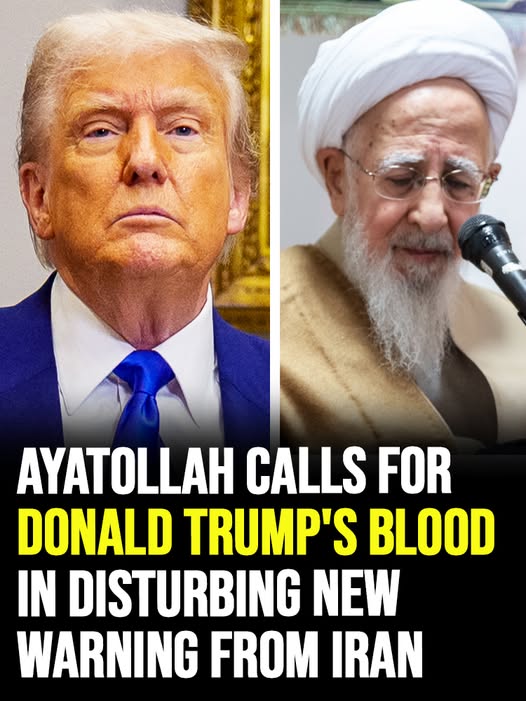
From pulpits and podiums, voices grew sharper. Clerics invoked sacrifice and vengeance. Military officials spoke of betrayal and retaliation. Then came the moment that changed the tone of everything: an Ayatollah, speaking with the authority of faith and power combined, named a single man as responsible. Not a faceless government. Not an abstract enemy. But Donald Trump himself.
In that instant, strategy became something more dangerous: a vendetta.
What had once existed in the murky realm of covert operations and deniable strikes now edged toward something far more personal. Words like “response” and “deterrence” were replaced with the language of honor and blood. The fragile line between shadow war and open catastrophe suddenly looked thinner than ever.
Yet beneath the fiery speeches and televised threats lies a quieter tragedy—one that cameras rarely linger on.
Families wait for bodies that will never return.
In small towns and crowded cities, mothers sit beside silent phones. Children stare at photographs of fathers who left for sea and never came home. In mosques, the names of the fallen sailors are read aloud, one by one, echoing against marble walls as mourners bow their heads. Some of the dead will never be found; the ocean keeps its secrets well. For many families, closure will never arrive—only the slow, heavy acceptance that their loved ones now belong to the sea.
Already, the loss of the Dena is being woven into something larger than a single tragedy.
Within Iran, it is becoming a symbol—another chapter in a national story built on sacrifice, resistance, and martyrdom. The fallen sailors are spoken of not only as victims but as heroes whose deaths demand remembrance and justice. Their memory strengthens a narrative that has shaped Iranian politics for decades: that the nation stands alone against powerful enemies and must answer force with force.
Across the world in Washington, the story is told very differently.
There, the operation is framed as a grim but necessary act in a long and largely hidden struggle—one fought through intelligence agencies, cyber operations, sanctions, and quiet military pressure. Officials describe it as part of a broader strategic contest, the kind of move calculated not for revenge but for deterrence. In that version of events, the sinking is tragic, but also justified.
Two stories. Two truths. And between them, a widening gulf.
This clash of narratives does more than shape headlines—it shapes the decisions of leaders. When a tragedy becomes a symbol, stepping back becomes harder. Public grief demands action. Political reputations become tied to strength and resolve. Each speech, each statement, each accusation pushes both sides further down a path that grows more difficult to abandon with every passing day.
By naming Donald Trump directly, Iran’s rhetoric crosses a threshold rarely breached in conflicts like this. Personalizing blame transforms geopolitical tension into something emotional, visceral, and unpredictable. It sharpens anger on both sides, turning strategy into something that feels like honor—and honor into something that demands repayment.
That kind of language carries its own risks.
When leaders speak of revenge, others sometimes listen too closely. Independent militias, lone actors, and shadow networks may feel called to act on their own interpretation of justice. In a region already crowded with rival groups and competing loyalties, even a small miscalculation can spiral quickly into something larger than anyone intended.
What began as deniable moves in a long-running shadow war now flirts openly with confrontation.
And with every new threat, every broadcast accusation, and every funeral prayer echoing through Tehran’s mosques, the room for quiet compromise grows smaller. The taste for revenge spreads faster than diplomacy. Emotions harden. Patience thins.
Somewhere beneath the dark waves where the ship went down, the wreckage of the Dena lies silent.
But above the surface, the storm it unleashed is only beginning.