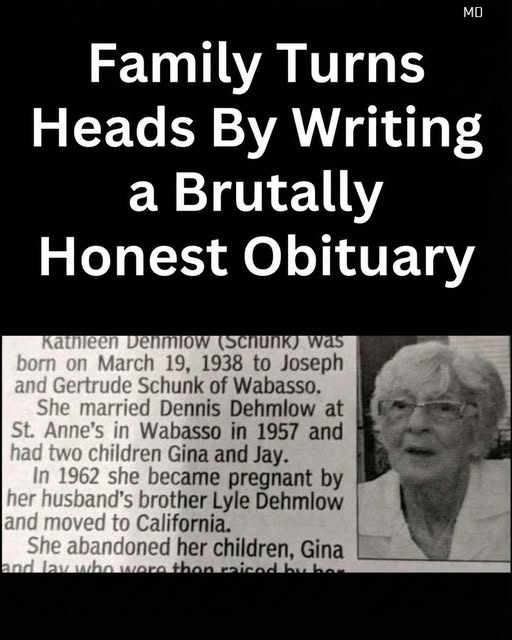
Obituaries are meant to console, to honor, to give a final bow to a life lived. But sometimes, they do the opposite. In Minnesota, a single obituary did more than mark a passing—it ignited a storm that tore apart a family and rippled through an entire community. What began as a seemingly ordinary notice spiraled into a national conversation about grief, retribution, and who truly has the authority to define a life once the person is gone.
When Kathleen Dehmlow’s obituary appeared in the local paper, it seemed, at first glance, like any other: a quiet chronicle of a small-town life, a list of surviving family members, a gentle farewell. But within a few startling sentences, the familiar rhythms of condolence gave way to sharp, unvarnished truths. Her adult children, long harboring resentments and unhealed wounds, used the obituary as a stage to expose the fractures in their family. In doing so, they turned a ritual meant to soothe into an unsettling, public reckoning. Readers were caught off guard: some felt the notice was cruel, almost vengeful; others recognized a rare and uncomfortable honesty about the deep scars parents can leave behind.
The reaction was swift and fierce. The local newspaper, under pressure from outraged readers, removed the obituary. Yet the questions it raised refused to disappear. Who should control the narrative of a life when the person can no longer speak for themselves? Are obituaries hallowed spaces reserved for praise and remembrance, or can they—and should they—acknowledge the complex, sometimes painful truths that shadow a life? In the silence that followed, one unsettling reality lingered: the way we write about death does more than mark an ending—it can reopen every chapter of a life, bringing joy, regret, and sorrow back into the light.
Kathleen Dehmlow’s obituary became more than a death notice. It became a mirror reflecting the complicated, messy truths of family, memory, and the delicate, sometimes volatile intersection of public and private grief. And in that reflection, communities everywhere are reminded that the end of a life is rarely simple, and rarely final.