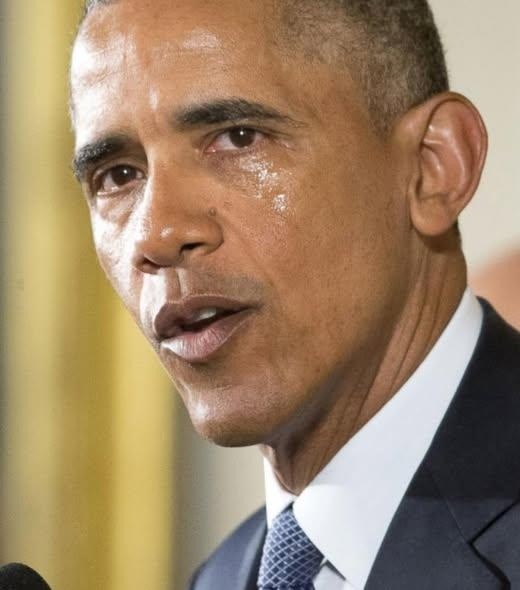
A new political firestorm has erupted after former U.S. president Barack Obama delivered a pointed remark that quickly reverberated across the American political landscape. During a recent public appearance, Obama suggested that supporting former president Donald Trump represents what he described as a “disrespect for democracy.” Within minutes, the comment began circulating widely online, igniting passionate reactions from supporters and critics alike and once again highlighting the intense polarization shaping modern American politics.
For many who admire Obama, the statement was seen as a candid defense of democratic principles. They argue that the former president has long warned about threats to institutional norms and the fragile foundations that sustain democratic governance. According to this perspective, democracy is not limited to the act of casting a ballot every few years. Rather, it is a system built on mutual trust, adherence to the rule of law, and the willingness of leaders and citizens alike to respect electoral outcomes and constitutional processes.
In his remarks, Obama emphasized that democratic systems rely heavily on shared civic responsibility. Elections, he suggested, are only one part of a much broader framework that includes respect for independent institutions, a free press, and peaceful transitions of power. When these pillars are questioned or weakened, he argued, the entire democratic structure can come under strain. To Obama and many of his allies, supporting leaders they believe challenge those norms raises deeper questions about the future stability of American governance.
However, the reaction from supporters of Trump was swift and forceful. Many critics interpreted Obama’s words as dismissive of millions of Americans who have chosen to support Trump for a variety of reasons. They argue that the very essence of democracy lies in the freedom to support whichever candidate one believes best represents their interests, values, and frustrations with the political system. From this viewpoint, labeling political support as a form of disrespect for democracy risks alienating large segments of the electorate.
Some Trump supporters also framed Obama’s comments as an example of what they perceive as a broader cultural and political divide between elite political figures and everyday voters. They argue that many Americans who back Trump do so because they feel ignored or marginalized by traditional institutions and political leadership. In their eyes, questioning that support can appear less like a defense of democracy and more like an attempt to delegitimize dissenting voices.
Political analysts say the clash of interpretations surrounding Obama’s statement reflects a deeper and more persistent divide in American public life. Over the past decade, the nation has witnessed growing polarization not only between political parties but also within communities, media ecosystems, and public discourse. Statements from prominent figures such as Obama or Trump often become lightning rods, quickly amplifying tensions that already exist beneath the surface.
As the country continues moving through a heated political era, remarks like these demonstrate how influential voices still shape the broader national conversation. Whether one sees Obama’s words as a principled defense of democratic norms or an unfair criticism of political opponents largely depends on where they stand within the political spectrum.
What is clear, however, is that debates about democracy, leadership, and the meaning of civic participation remain at the center of American political life. As supporters of both Obama and Trump continue to defend their interpretations of democracy, the discussion sparked by these remarks serves as yet another reminder of how passionately Americans engage with the future direction of their country.