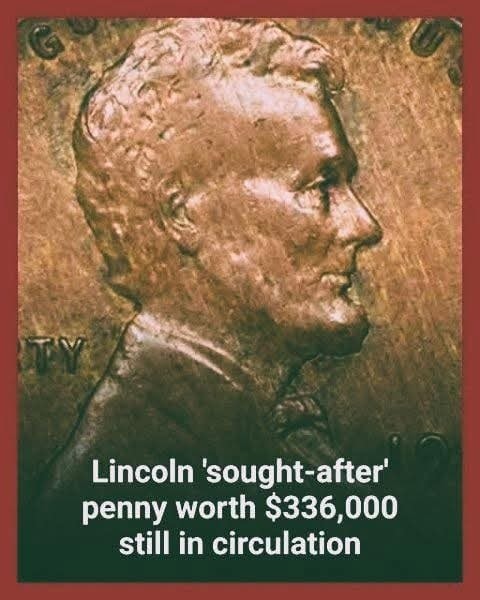
The story of the 1943 Bronze Lincoln Cent reads almost like a piece of wartime legend — a small copper coin that should never have existed, yet somehow slipped into circulation and became one of the most coveted treasures in American numismatics.
In 1943, as the United States was fully immersed in World War II, the nation faced severe shortages of critical metals. Copper, in particular, was urgently needed for military equipment such as shell casings and electrical wiring. To conserve the metal for the war effort, the United States Mint made a historic change: that year’s Lincoln Cent would no longer be struck in the traditional copper alloy. Instead, the coins were produced from zinc-coated steel, giving them their distinctive silvery appearance.
But history took an unexpected turn.
Somehow, a handful of leftover bronze planchets — the copper-based blanks used for the previous year’s pennies — remained in the Mint’s machinery. When production began, a tiny number of these bronze blanks were accidentally struck with the 1943 date. The result was a coin that was never supposed to exist: the 1943 Bronze Lincoln Cent.
For several years, these accidental coins circulated unnoticed among ordinary pocket change. Then, in 1947, a few examples began appearing in collections and coin shops. Word spread quickly. What began as a curiosity soon became a sensation.
Collectors were fascinated. Newspapers reported on the mysterious copper penny from a year when pennies were supposed to be steel. Rumors spread that the coin could be worth a fortune. Practically overnight, public fascination exploded. Children across the country reportedly searched through jars of change and piggy banks, hoping to find the elusive bronze penny hiding among the common steel ones.
That fascination has never faded.
Today, the 1943 Bronze Lincoln Cent remains one of the most legendary error coins ever produced by the United States Mint. Only a tiny number are known to exist, and when one appears at auction it can command staggering prices, sometimes reaching hundreds of thousands — even over a million — dollars.
Beyond its rarity, the coin itself is striking to look at. On the front, or obverse, is the familiar portrait of Abraham Lincoln, first introduced on the penny in 1909. The bold bust captures Lincoln’s thoughtful profile, framed by the inscriptions “IN GOD WE TRUST,” “LIBERTY,” and the date 1943. On genuine circulated examples, the coin often carries the subtle marks of time — gentle scratches, softened edges, and the warm patina of aged bronze — silent evidence of decades spent moving through hands, pockets, and history.
For coin enthusiasts, seeing one in person is unforgettable. It’s more than just a penny. It’s a wartime mistake that became a legend — a tiny piece of American history that proves even the smallest objects can hold extraordinary stories.
And somewhere out there, collectors still dream that one might appear unexpectedly in an old coin jar, waiting to be rediscovered. 🪙✨