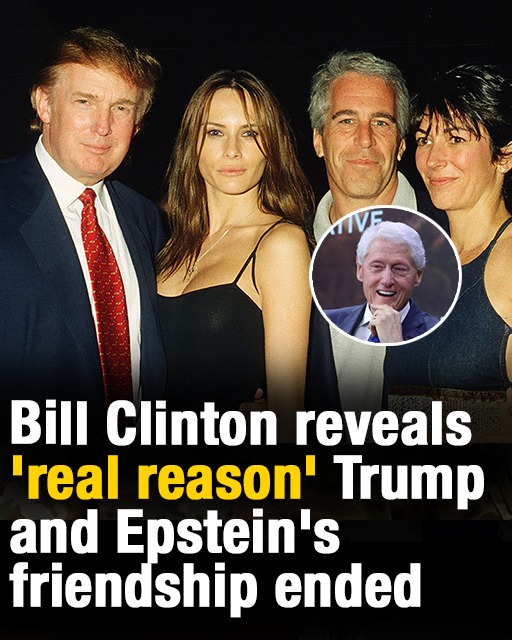
A political shockwave has rippled through Washington after former U.S. president Bill Clinton delivered sworn testimony that places a new, uncomfortable spotlight on the past relationship between Donald Trump and the disgraced financier Jeffrey Epstein.
What Clinton described under oath wasn’t a dramatic confrontation or a moral reckoning. Instead, it was something far quieter — and potentially far more damaging. According to Clinton’s account, Trump once privately expressed regret about a “falling out” with Epstein, not because of the crimes that would later make Epstein infamous, but because of a dispute over a high-stakes real estate deal.
That version of events collides head-on with the narrative Trump has repeated for years.
For a long time, Trump and his allies have insisted that he severed ties with Epstein out of disgust over what he described as “creepy” behavior around young women. The story painted Trump as someone who recognized troubling conduct early and chose to distance himself from it. Supporters often cited this claim as proof that Trump had cut Epstein off long before the financier’s crimes became widely known.
But Clinton’s testimony introduces a very different picture — one that suggests the break may have been less about principle and more about business.
In Clinton’s telling, the moment came during a charity golf gathering years ago. Trump, according to the sworn account, spoke with a tone of regret, reflecting on the friendship he once had with Epstein. He reportedly remarked that the two men had shared “some great times” before their relationship unraveled during a competitive property bidding war.
The conversation, Clinton recalled, ended not with anger or condemnation, but with a simple sentiment: “I’m sorry it happened.”
That seemingly casual remark has now become the center of a political firestorm.
If accurate, it suggests the rupture between Trump and Epstein may have stemmed from wounded pride and business rivalry rather than moral outrage. Critics argue that such a scenario would contradict years of public statements framing Trump’s separation from Epstein as an ethical stand.
The reaction on Capitol Hill has been immediate and deeply divided.
Some Republicans have emphasized that Clinton’s willingness to testify at all demonstrates cooperation in ongoing inquiries and argue that the remarks are being taken out of context or exaggerated by political opponents. They maintain that Trump’s history with Epstein has already been scrutinized extensively and that the matter has been repeatedly clarified.
Democrats, however, see Clinton’s sworn account as a reason to dig deeper. They argue that discrepancies between Trump’s public statements and the version described in testimony raise questions about what truly ended the relationship — and whether more details remain hidden behind years of conflicting explanations.
Complicating matters further are the many fragments of history that already exist in the public record. Old photographs of Trump and Epstein together at social events, past quotes in which Trump spoke warmly about the financier, and later statements condemning him all coexist in a complicated timeline that has long fueled speculation.
Now Clinton’s testimony adds another piece to that puzzle.
Whether it ultimately reshapes public understanding or simply deepens the political divide remains to be seen. But one thing is clear: the history connecting Trump and Epstein — once treated by many as settled — has been thrust back into the national spotlight.
And in Washington, where narratives often matter as much as facts, even a single sentence spoken under oath can reopen an entire chapter of political controversy.