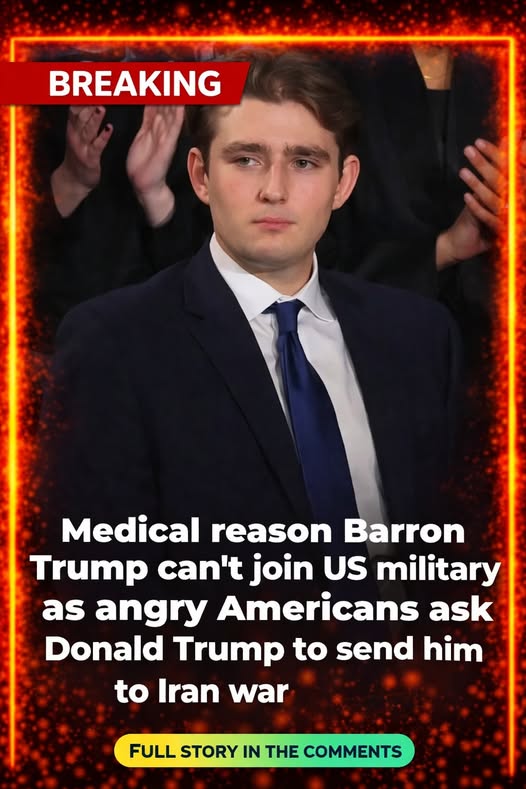
Outrage didn’t just flare—it detonated overnight. As bombs rained down on Iranian cities and the news of Supreme Leader Ayatollah Ali Khamenei’s death spread like wildfire, Americans’ anger found an unlikely target: a 19‑year-old who has never held public office. Barron Trump, the youngest son of a former president, became the focus of a social media storm so fierce it seemed to set the internet ablaze. Hashtags like #SendBarron surged across platforms, demanding that he be the first to face the consequences of a war his father ordered from golf courses and gilded towers. Each post sharpened the question, echoing in feeds across the nation: if a president sends others to die, should his own children pay the price too?
Nothing about Barron seemed to slow the tide. His extraordinary height, which might exempt him from military service, was scrutinized alongside reminders of medical exemptions and draft dodges from decades past. Yet these facts mattered little against the raw, collective fury. Americans, wounded by both history and circumstance, watched as the spectacle unfolded: a teenager, caught in the crossfire of outrage he never asked for, became a symbol of a larger, unhealed national wound.
Because this is no longer just about one young man. The uproar over #SendBarron taps into something deeper—a familiar, aching question: who bears the cost when leaders choose war? For many, the image of Donald Trump issuing military strikes while his family remains shielded collides painfully with memories of fathers, sons, and daughters who were sent to faraway battlefields. The shadow of Trump’s own Vietnam-era bone spur exemption has resurfaced, mirrored now in debates over Barron’s physical eligibility. It is a reminder that privilege and power often come with immunity, even as the country’s children pay the ultimate price.
Meanwhile, Iran teeters on the edge of chaos. The sudden vacuum of leadership after Khamenei’s death has intensified fears of a conflict that could spiral beyond control, leaving uncertainty and anxiety in its wake. In this tense, volatile climate, the demand for accountability has grown louder, harsher, and more personal. Whether or not Barron ever dons a uniform, he has become a vessel for the nation’s collective rage—a lightning rod for anger that refuses to be silenced. In the end, the debate is less about one teenager than about a truth that resonates across generations: when war is chosen at the top, who truly pays the price?