The world woke up to a nightmare that felt ripped from the pages of a thriller—but this was no fiction. Tehran burned beneath a sky streaked with fire, the streets echoing with sirens and the panic of millions scrambling for shelter. In Israel, air-raid sirens blared from city to city, a nation bracing itself for retaliation it had long feared. In Washington, the air was thick with defiance, as leaders dared Iran to strike back harder, louder, deadlier.
Leaders who once seemed untouchable were suddenly gone. Missiles streaked across borders with deadly precision. The rhetoric from every podium had abandoned restraint: promises of “force never seen before” ricocheted through halls of power, through newsfeeds, through the minds of ordinary people who could do nothing but watch. Amid the chaos, one ambassador’s voice cut like ice—a warning so chilling it lingered in every room—before it was swallowed by the sound of explosions and emergency alerts.
What had started as yet another stalled round of tense nuclear negotiations had metastasized into something far worse: a confrontation that now felt irreversible, terrifyingly final. The coordinated U.S.–Israeli strike on Tehran’s top leadership shattered long-standing international taboos, crossing what Iran had repeatedly called its “ultimate red line.” The retaliation came fast. Waves of missiles and drones erupted from Tehran, each one carrying promises of a campaign “more devastating than any in history,” aimed not only at Israel but also at American bases scattered across the region. Words that once seemed extreme now filled every briefing: obliteration, war crimes, annihilation, and forces “never seen before.”
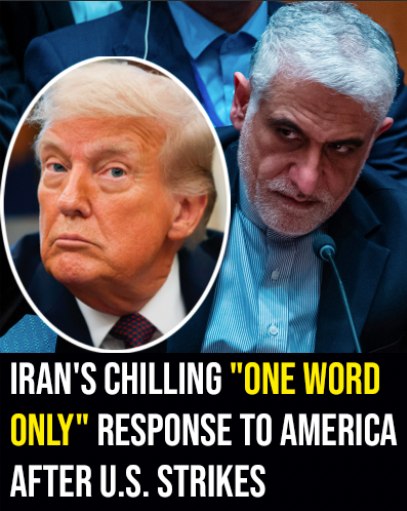
Inside the United Nations, the last fragile veneer of diplomacy was fracturing in real time. Iran’s ambassador, face etched with anger and grief, condemned the strikes as a crime against humanity, invoked Article 51 to justify self-defense, and delivered a coldly pointed warning to Washington: “Be polite.” The U.S. envoy, unmoved, accused Iran’s regime of murder and illegitimacy, refusing to show even the smallest sign of concession. Between them, the Secretary-General stood like a solitary voice of reason, pleading that peace remained the only path forward—yet the missiles were already airborne, leaving words trailing helplessly behind the roar of engines and the flash of explosions.
Every hour, every minute, the sense of finality grew. Maps that once seemed abstract—lines on a page—were now drawn in fire and smoke, shifting in real time with each strike and counterstrike. Civilians across the Middle East hid in basements, government bunkers, and subway stations. Global markets wavered. Cities far from the conflict braced for ripple effects, the specter of a wider war looming ever larger.
The world had stepped onto a razor’s edge, and no one could be certain which side would slip first. Diplomacy was still being whispered, but the language of annihilation had already taken center stage. For the first time in decades, humanity faced a confrontation that wasn’t just political, not just military—it was existential.