Oregon’s fuel system isn’t just under pressure — it’s balancing on the edge of a knife.
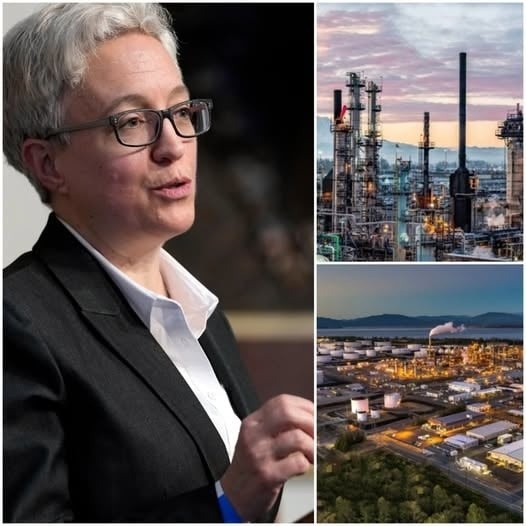
In recent corporate filings, Phillips 66 made it clear that it is actively divesting as much as $3 billion in refinery assets. On that list sits the Ferndale refinery — the single most critical facility supplying gasoline and diesel to Portland and large portions of Oregon.
If that refinery changes hands, scales back, or shuts down, the consequences won’t ripple. They will slam.
The warning comes on the heels of an already seismic shift. In December 2024, Phillips 66 abruptly shuttered its Los Angeles refinery, a 139,000-barrel-per-day operation that had long been a cornerstone of West Coast refining capacity. Overnight, a massive piece of the region’s fuel infrastructure vanished. There was no gradual phaseout, no extended buffer. Just silence where production once roared.
Now, with Ferndale firmly in the crosshairs, energy analysts, trucking associations, agricultural groups, and rural Oregon communities are sounding alarms that grow louder by the day.
Because here’s the hard truth: Oregon has no refineries of its own.
Not one.
The state depends almost entirely on fuel refined elsewhere — and delivered through a system that leaves virtually no room for error. There is no meaningful alternative import route ready to absorb a sudden shortfall. No vast marine backup operation standing by. No deep strategic cushion. Oregon typically maintains just 10 to 15 days of fuel storage — barely half the national average.
Ten days.
That is the margin between normal life and widespread disruption.
The Olympic Pipeline: Oregon’s Single, Aging Lifeline
Nearly all of Oregon’s roughly 100,000 barrels per day of gasoline and diesel demand flows through one 400-mile artery: the Olympic Pipeline Company pipeline.
This aging line carries refined fuel south from Washington’s five refineries — Cherry Point Refinery, Ferndale refinery, Marathon Anacortes Refinery, Puget Sound Refinery, and U.S. Oil Tacoma Refinery — directly into Portland’s storage terminals.
It is not just a pipeline. It is Oregon’s fuel heartbeat.
If it falters, the state feels it immediately.
That vulnerability was exposed in September 2025, when a brief maintenance shutdown rippled through the system. Within hours — not days — pump prices spiked. Stations began scrambling to manage dwindling supplies. AAA Oregon reported signs of panic buying as drivers topped off tanks “just in case,” accelerating the squeeze.
Nothing catastrophic had happened. No natural disaster. No refinery explosion. Just routine maintenance.
And yet the reaction was swift and sharp — a preview of what a sustained disruption could look like.
A System With No Slack
Oregon’s fuel network operates with almost no elasticity. A mechanical failure. A regulatory shutdown. A labor dispute. A divestiture that leads to scaled-back production. Any of these could constrict supply long enough to drain storage terminals in under two weeks.
And when fuel tightens, it isn’t just commuters who feel it.
It’s truckers delivering food across the Cascades.
It’s farmers harvesting crops on tight seasonal windows.
It’s emergency vehicles, construction crews, school buses, fishing fleets, and rural communities with no transit alternatives.
The closure of the Los Angeles refinery was a warning shot. The potential divestiture of Ferndale could be a structural shift — one that exposes how precariously Oregon’s energy security rests on infrastructure built for a different era.
For now, the Olympic Pipeline continues to hum beneath forests and fields, carrying the fuel that keeps Oregon moving. But the question growing louder in policy circles and boardrooms alike is simple:
How long can a state of four million people rely on a single, aging artery — with barely ten days of blood in reserve?