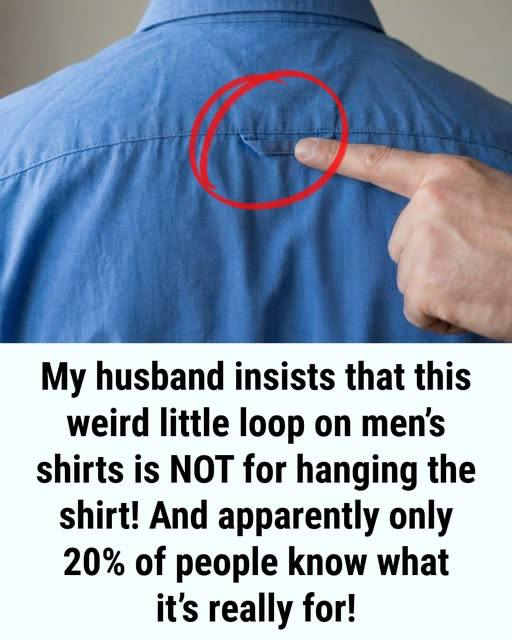
The tiny loop on the back of your shirt might seem like a trivial stitch, an afterthought of design—but once, it decided far more than fashion. It quietly dictated who slept where, who could claim a bunk as their own, who stayed clean, and, in its understated way, who was “taken.” Born in the steel belly of U.S. Navy ships, it was a survival tool disguised as a simple loop of fabric. It kept uniforms crisp amid chaos, preserved a sense of order in cramped quarters, and offered sailors a small piece of dignity in the unforgiving world of the open sea.
Long before it became a subtle nod to style, that modest loop was a lifeline. Onboard ships where closets were nonexistent and personal space even scarcer, sailors needed practical solutions to keep their uniforms from touching filthy bunks, damp floors, or swaying decks. This tiny strip of fabric, stitched meticulously at the back of a shirt, transformed bare metal hooks into makeshift wardrobes. In the relentless rhythm of naval life—between the roar of engines, the smell of salt and sweat, and the constant pitch of the ship—the loop quietly preserved order, pride, and a sense of personal ownership in a world where control was scarce.
As time passed and the design traveled ashore, the loop shed its naval practicality and adopted a new, almost secretive identity. In Ivy League dormitories, it became a silent language, a subtle social signal. Tearing it off could signify commitment, a wordless gesture of loyalty; leaving it intact could imply independence or availability. It was a small, almost imperceptible detail that carried meaning beyond words, a nod to the wearer’s social code and personal history.
Today, it endures not only as a functional detail but as a symbol of craftsmanship, heritage, and understated storytelling. Travelers still hang their shirts by it, casual wearers unknowingly benefit from its design, and admirers of fine tailoring recognize its quiet elegance. That tiny loop, easy to overlook, is proof that even the smallest details can carry centuries of hidden stories—stories of survival, loyalty, and the unexpected ways human life and fashion intertwine.