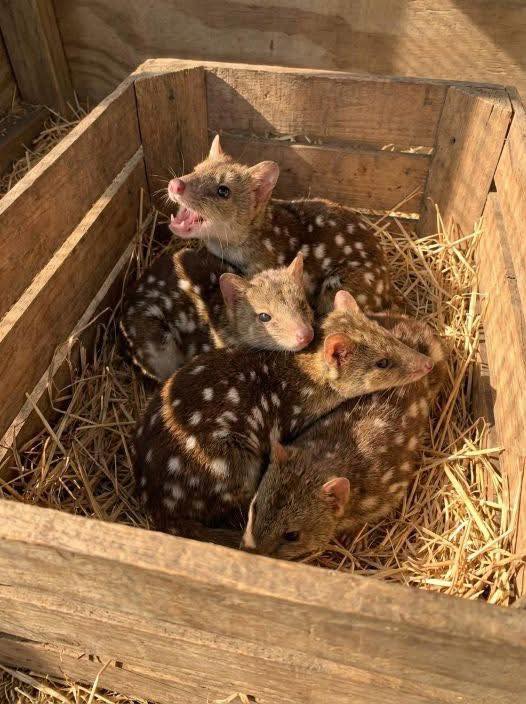
A new chapter of life is unfolding in a place long written off as silent. At Mt Gibson Wildlife Sanctuary, a remarkable revival is taking shape. Tiny hunters, clad in spiky fur and armed with sharp instincts, are emerging from the shadows of near extinction, defying more than a century of loss. For decades, these creatures, the elusive western quolls, were all but forgotten, their presence erased from the red-dusted landscapes of Australia. Now, with eyes gleaming and claws at the ready, they have returned, stunning scientists and conservationists alike. But amidst the joy and wonder, a pressing question lingers: is this a true miracle, or the start of a battle for survival that is far from over?
In the heart of Mt Gibson, the sanctuary’s sun-baked earth now echoes with the quiet scuttles and tentative growls of tiny joeys taking their first steps into a world still fraught with danger. Each wobbling stride and curious sniff is more than just adorable—it is a declaration of resilience. Through meticulous planning, careful reintroduction, and unwavering protection of habitat, these miniature predators are proving that extinction is not always inevitable. Where past efforts faltered, the sanctuary’s strategies—predator control, habitat restoration, and vigilant monitoring—are creating a space where life can flourish once more.
Ecologist Georgina Anderson and her dedicated team watch with quiet awe as the nocturnal hunters stake their claim on the landscape. They observe the quolls navigating burrows, hunting insects and small prey, and cautiously exploring their surroundings, all while under the shadow of feral cats, foxes, and the harsh realities of a changing climate. Each joey’s survival is a fragile victory, yet their presence signals something profound: with care, patience, and opportunity, even a species pushed to the brink can claw its way back.
For Australia, the resurgence of the western quoll is more than a conservation success—it is a reminder that the story of wildlife is never truly finished. Lost species do not always vanish in silence; sometimes, their tales are rewritten in the soft pads of tiny feet, the flicker of bright, alert eyes, and the fierce determination of life refusing to be forgotten. At Mt Gibson, the red earth is alive once more, telling a story of hope, courage, and the relentless pulse of nature fighting to reclaim its place.