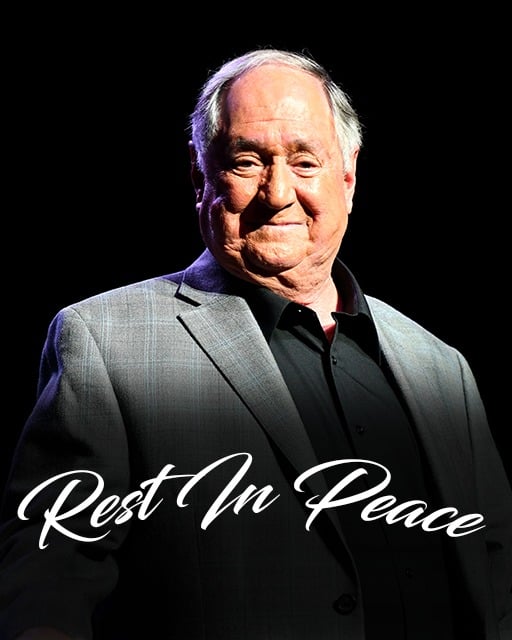
The news broke like the opening line of a heartbreak ballad—soft, disbelieving, impossible to ignore. Neil Sedaka, the voice and pen behind some of the most tender, buoyant, and bittersweet songs of the last century, has passed away at 86. In living rooms and on glowing phone screens, fans stared at the headline as if it might change. It didn’t. A hush fell over generations who had grown up with his melodies stitched into the fabric of their lives. His family grieves a beloved husband, father, and grandfather. The world mourns a craftsman of feeling. And everywhere, people are pressing play—reaching for the records that once held their hands through first kisses, shattered breakups, and fragile reconciliations—only to find the choruses now carry a different weight.
For millions, Sedaka was never just a name printed on a record sleeve; he was the soundtrack to becoming. From his humble beginnings in Brooklyn to the bright lights of international stages, he possessed the rare alchemy of turning ordinary emotion into something luminous and lasting. His early hits were deceptively simple—sunlit melodies, unforgettable hooks—but beneath their sparkle lived a meticulous composer and a storyteller who understood the tremble in a young heart. He sang of longing and loyalty, of pride and regret, of love found and lost, and somehow made each listener feel as though the song had been written just for them.
When the tides of popular music shifted and many of his contemporaries slipped quietly into nostalgia, Sedaka refused to become a memory. The 1970s saw him reemerge with renewed purpose, proving that reinvention is its own kind of artistry. His pen remained sharp, his instincts unerring. He adapted without surrendering the sincerity that defined him. In an industry that often discards yesterday’s voices, he demonstrated that true musicianship does not age—it deepens. His later work carried the wisdom of experience, resonating not only with those who had grown up with him, but with a new generation discovering that emotion, when honestly expressed, never goes out of style.
As tributes pour in from fellow artists, friends, and lifelong fans, a portrait forms of a man who never stopped caring—about the craft, about the audience, about getting the lyric exactly right. Those closest to him remember his warmth and wit, the quiet dedication behind the spotlight. They speak of long hours at the piano, of laughter in between rehearsals, of a man who measured success not only in chart positions but in the connection forged when a crowd sang his words back to him.
Now the needle lifts. The stage lights dim. Yet the silence is anything but empty. His songs linger—threaded through wedding dances and anniversary dinners, echoing in reunion halls and in the stillness of solitary nights when memory feels especially near. They live in car radios and old jukeboxes, in vinyl collections carefully preserved, in playlists shared between parents and children. The voice may be gone, but the music endures, looping gently through time.
In the end, that is the quiet miracle of a life devoted to song: it outlasts the singer. And so, even in farewell, Neil Sedaka remains—rising softly from a turntable somewhere, reminding us that love, in all its sweetness and sorrow, always finds its melody.