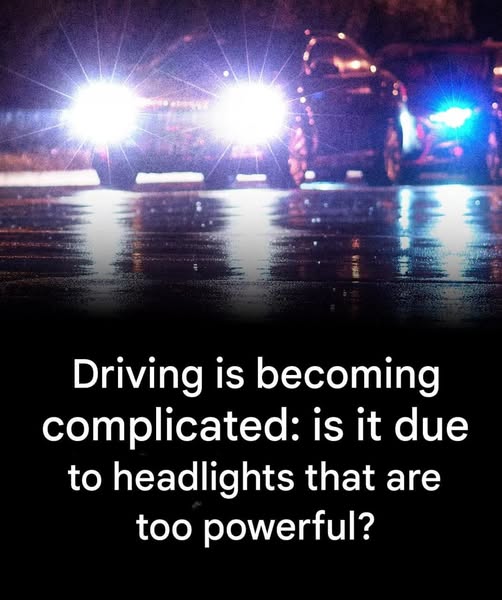
The glare doesn’t just appear — it strikes.
One second you’re driving calmly through the night, the rhythm of the road steady beneath your tires. The next, a blast of white light floods your windshield like a flashbulb exploding in your face. The road vanishes. The lane markings dissolve. Your pupils contract in panic. Your hands grip the steering wheel tighter. And for that split second — that dangerously long split second — doubt creeps in:
Is something wrong with my eyes… or have headlights truly become blinding?
You’re not imagining it. And you’re certainly not alone.
Every night, millions of drivers experience that same disorienting moment. A surge of glare from an oncoming vehicle forces them to slow down, squint, or even look away. It feels sudden. Personal. Almost alarming. But the real cause isn’t hidden in darkness — it’s hiding in plain sight.
Modern vehicles increasingly rely on LED headlights engineered to cast brighter, farther-reaching illumination than ever before. These lights are undeniably effective at revealing obstacles, road signs, and curves ahead. Yet their crisp, blue-white color and sharply concentrated beams can overwhelm the human eye — especially eyes that are already tired after a long day.
It’s not just about brightness. It’s about how that brightness behaves.
Color temperature plays a powerful role. Traditional halogen lights emit a warmer, softer yellow glow. LEDs, by contrast, produce a cooler, whiter light that scatters more aggressively in rain, fog, or on wet pavement. Add reflective road surfaces and droplets on your windshield, and the glare multiplies.
Beam direction matters just as much. When headlights strike directly at eye level — a common occurrence with taller SUVs and trucks — the effect intensifies. Even slightly misaligned headlights can shoot straight into opposing traffic rather than down toward the pavement. The result? Momentary visual saturation. A blur. A pause. That instinctive hesitation that makes you ease off the accelerator because, for a heartbeat, you simply can’t see clearly enough to trust the road ahead.
And then there’s the quiet factor few people consider: aging vehicles and neglected adjustments. Over time, suspension changes, worn components, or heavier loads in the trunk can subtly tilt a car’s angle upward. That small shift is enough to turn helpful illumination into blinding glare for everyone else.
But here’s the reassuring truth: this isn’t an unavoidable fate of modern driving.
Small, deliberate actions can dramatically reduce the problem.
A simple headlight alignment check ensures your beams illuminate the road — not the windshields of other drivers. If your vehicle has manual beam leveling, adjusting it when your car is fully loaded can prevent upward glare. Keeping your windshield meticulously clean, inside and out, minimizes light scatter that magnifies brightness into a haze. Even something as subtle as shifting your gaze slightly to the right edge of your lane when facing oncoming traffic can protect your vision without sacrificing control.
Technology, too, is evolving. Adaptive headlights that automatically adjust beam height and direction are becoming more common. Some systems detect oncoming vehicles and dim selectively, preserving visibility for everyone on the road. As these innovations spread, night driving promises not just sharper illumination — but calmer nerves and safer journeys.
So the next time that burst of light makes you question your vision, remember: it’s not weakness. It’s physics, design, and alignment working together — sometimes imperfectly.
The road hasn’t disappeared.
With awareness and a few smart adjustments, you can keep it clearly in sight — and drive into the night with confidence instead of doubt.