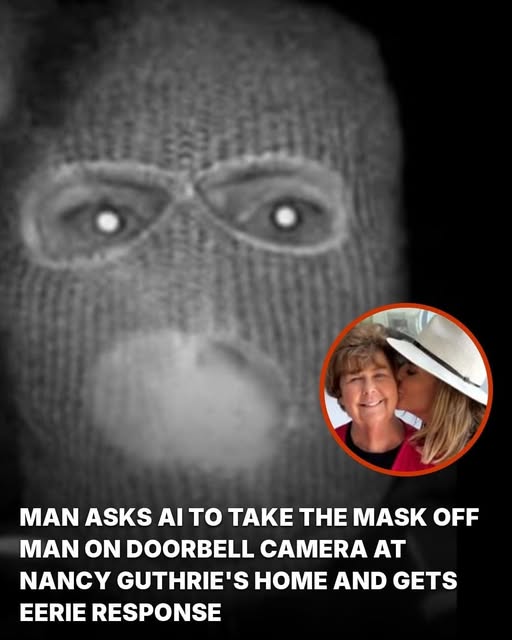
The internet believes it has unmasked a ghost. Across social media feeds, in forums, and in comment sections, millions of eyes are glued to a single digital image. A nation, anxious and unsettled, watches, desperate for answers, as the disappearance of a mother collides with viral speculation, conspiracy theories, and AI-fueled imagination. One YouTuber uploads a single AI-generated image from a doorbell camera frame. Within hours, commenters insist they “recognize” the face. Names are whispered. Allegiances are questioned. Reputations teeter on the edge. And somewhere, in quiet, fearful homes, a family waits, terrified, hoping for truth rather than spectacle.
Nancy Guthrie’s disappearance has become more than a missing person case—it has become a grim collision of real-world anguish and reckless digital theater. Law enforcement works tirelessly through evidence, interviews, and painstaking investigation. Meanwhile, a single AI reconstruction—crafted with no verification, no chain of custody, no accountability—spawns a feeding frenzy online. Millions play detective, speculating, accusing, and fabricating stories around a face that may exist only in pixels. Comment sections explode with theories; strangers are named, their identities dragged into a storm of public scrutiny, while the police have neither confirmed a suspect nor tied the masked figure to any crime.
Behind the digital noise, behind the hashtags and viral shares, a family lives in relentless torment. Every click, every share, every speculative post twists the narrative of their loved one into content for entertainment. What the case truly needs are witnesses, concrete facts, and verified leads—not wild guesses and AI-generated illusions. Each reconstruction, each viral theory, risks burying truth beneath layers of speculation, misdirection, and digital fantasy. Until authorities release confirmed information, every so-called “unmasking” is just that: a mirage, dangerous and seductive, tempting the world to believe it knows what it cannot.
In a moment where grief, fear, and technology collide, the question remains: can we separate reality from digital invention before it’s too late?