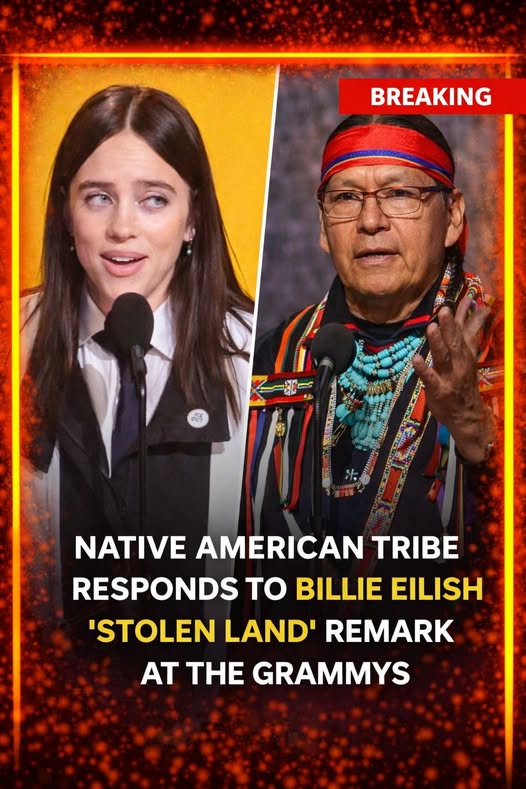
The room erupted in applause. Social media ignited in a frenzy. And then, in the wake of that viral moment, the voices of the people whose land she had named began to be heard. Billie Eilish’s remark about “stolen land” during the Grammys sparked a whirlwind of reactions—some praising her courage, others dismissing it as superficial. But within hours, a Native American tribe responded in a way that transformed the conversation entirely. They did not attack Eilish; instead, they quietly, yet powerfully, reframed the moment.
Tribal leaders used her comment not as a target, but as a turning point—a chance to educate a wider audience. They expressed gratitude that the spotlight had drawn attention to Indigenous histories, while cautioning that acknowledgment without understanding risks becoming another fleeting gesture in a world eager for viral soundbites. True solidarity, they emphasized, requires more than words. It demands a recognition of whose land you stand upon, a willingness to learn the unique stories of each tribe, and an awareness that “stolen land” is not just a phrase tethered to the past—it is a living, ongoing reality. Court cases, broken treaties, and the displacement of communities persist to this day.
In their carefully measured statement, the tribe shifted the focus from a fleeting celebrity moment to the people whose lives and lands continue to bear the consequences of history. They called on artists, institutions, and audiences alike to move beyond applause—to act. They encouraged support for Indigenous-led organizations, meaningful inclusion of tribes in decision-making, and listening before speaking on their behalf. By doing so, the tribe transformed a viral Grammy clip into a doorway—a doorway that may close as quickly as it opened unless those newly awakened commit to staying, learning, and walking alongside Native communities.
What began as a fleeting moment in pop culture became, through the tribe’s response, a lesson in responsibility, awareness, and the power of amplification when paired with education and action. It was a reminder that history is not behind us—it is alive, and it is calling for those willing to see it, understand it, and respond with more than applause.