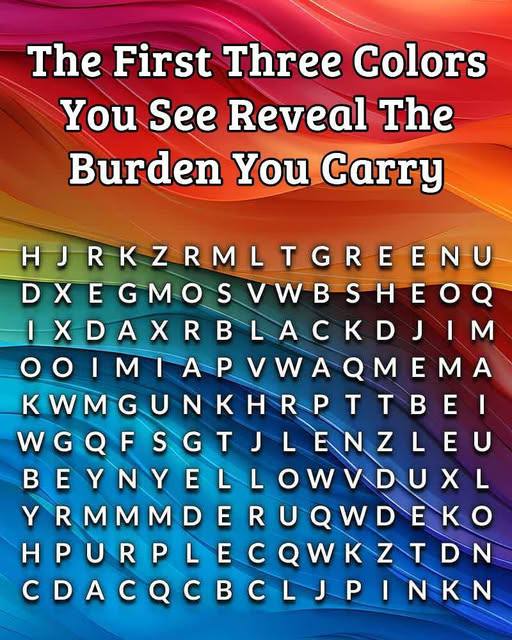
When you rush to name the first three colors that catch your attention, you may think you’re making a random choice. But you’re not reaching for destiny or revealing some mystical fate—you’re catching your nervous system in motion. In that split second, before logic edits your response, something deeper answers for you.
Red. Blue. Yellow. Black. White. Green. Purple. Orange. Gray.
None of them are neutral. Each one carries layers of meaning you’ve absorbed over a lifetime—childhood memories, cultural messages, private triumphs, quiet wounds, old fears, forgotten joys. You’re not simply choosing shades from a palette. You’re revealing what feels urgent to you, what feels safe, what feels powerful, what feels heavy. You’re exposing, in a subtle way, how you’ve been organizing your inner world.
Maybe red feels like survival or intensity.
Maybe blue feels like calm—or loneliness.
Maybe yellow feels like hope—or pressure to stay bright.
Maybe black feels like protection.
Maybe white feels like relief.
Your choices aren’t accidents. They are emotional fingerprints.
That’s where this exercise quietly shifts from being playful to being profound. It stops being about color theory and starts becoming a confession. Not a dramatic one. Not something you announce to the world. But a small, private admission: This is what I’ve been carrying. This is what I’ve been craving. This is what I’ve been avoiding.
The real power of this exercise is not in whether it’s “accurate.” It’s not a personality test, not a fortune reading, not a diagnosis. Its power lies in honesty. The honesty of answering quickly. The honesty of giving each color one sentence: what it means to you, what it stirs, what it symbolizes in this season of your life.
And if something in that reflection stings—if a word feels too close, too sharp—that isn’t a verdict against you. It’s a signal. Not that you’re broken. Not that you’re flawed. But that you’re carrying more than you let yourself admit.
Color will not fix your life.
It will not undo your past.
It will not magically transform your future.
But it can give your inner weight a language.
And once something has a name, it becomes less shapeless. Less overwhelming. Less powerful over you.
Named burdens are easier to face.
Named fears are easier to challenge.
Named longings are easier to honor.
So when you choose those first three colors, don’t overthink them. Let them speak. Then listen carefully to what you say about them. You may discover that what you thought was a simple exercise is actually a quiet doorway—one that leads you back to yourself.