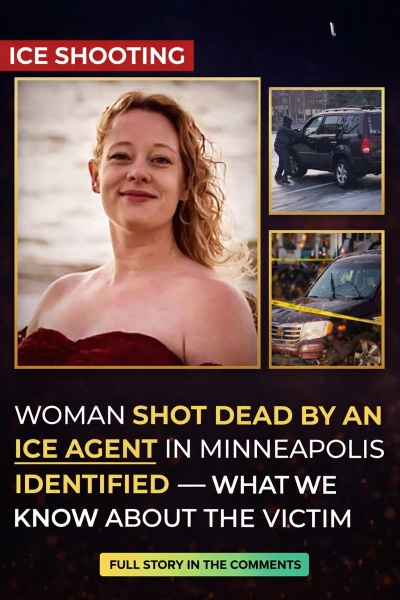
A mother’s life ended in a shocking burst of gunfire on a quiet residential street in south Minneapolis — a moment that stunned a community and ignited a national debate. On the morning of January 7, 2026, what federal officials described as a “targeted operation” carried out by U.S. Immigration and Customs Enforcement (ICE) turned fatal in a matter of seconds. Witnesses watched in stunned disbelief as a burgundy SUV, its windshield riddled with bullet holes, lurched down Portland Avenue before crashing into a light pole. Officials immediately labeled the incident an act of self-defense. But to neighbors on the street — and to many across the city — it looked like something far darker: an unarmed woman gunned down in broad daylight as she tried to pull away from a line of armed federal agents.
In the days that followed, the name behind the headlines began to emerge: Renée Nicole Macklin Good, a 37-year-old U.S. citizen, mother of three, poet, musician, and beloved friend who had only recently made Minneapolis her home. Just blocks from where she was killed, her life and legacy began to come into focus. Her online presence — photos of her with her children, posts about her writing, and memories shared by friends — painted the picture of a creative, kind-hearted soul, someone whose words once earned her a university poetry prize and whose compassion touched many, not a figure poised for a violent confrontation with federal agents.
Renée’s mother, Donna Ganger, could scarcely find words to describe the chaos that had ripped her daughter from the world. “It’s so stupid,” she said, insisting her daughter was terrified in those final moments — not threatening. Neighbors echoed that sentiment, remembering Renée’s warmth, her gentle nature, her quick laugh, and the sparkle in the eye of her six-year-old son, who now faces life without his mother and whose father died years earlier.
The street where it happened has since become a place of tribute. Flowers, candles, and handwritten signs now cluster at the base of the light pole that marked the end of Renée’s last drive, each one a testament to the grief and anger rippling through her community. What began as mourning has hardened into outrage — not just over one life lost, but over long-standing questions about federal power on local streets, ICE’s aggressive tactics, and who exactly is protected when armed officers open fire.
Supporters and critics alike closely scrutinized body-camera and cellphone footage as it spread online, and even local officials weighed in. Minneapolis leaders disputed the federal account, saying the video did not support the claim that Renée posed a threat, and called for greater transparency and accountability. Meanwhile, ongoing debates about immigration enforcement, law enforcement jurisdiction, and civil rights have only intensified in the weeks since her death.
In the end, Renée’s story is not just about a headline or a controversial shooting — it’s about a family torn apart, a life cut short, and a community searching for answers in the aftermath of a tragedy that refuses to fade quietly from memory.