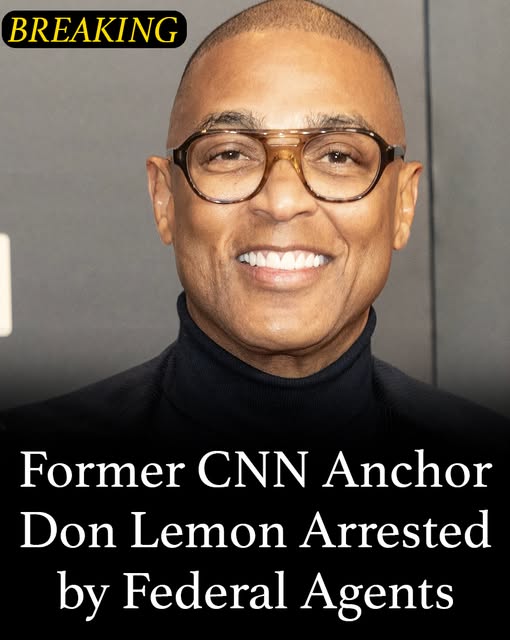
Don Lemon didn’t see the handcuffs coming — and the fallout is shaking the nation.
What began as routine reporting at a high‑profile event turned into one of the most explosive clashes between press freedom and federal authority in recent memory. Veteran journalist Don Lemon, in Los Angeles to cover the Grammys, was suddenly surrounded and taken into custody by federal agents late Thursday night — a stunning arrest that his attorney has denounced as unconstitutional and unprecedented.
Supporters are outraged. Civil liberties groups are mobilizing. And critics are circling like vultures — each side staking its claim in what may become a defining moment in the fight over press freedom in America.
At the center of it all is a protest that erupted on January 18 inside Cities Church in St. Paul, Minnesota, where demonstrators confronted worshippers and a pastor who also serves as an official with U.S. Immigration and Customs Enforcement (ICE). The event, rooted in anger over federal immigration enforcement and deadly encounters with ICE agents, drew national attention. Lemon showed up not as an invited speaker but as a reporter, livestreaming interviews with protesters and congregants alike.
Just days later, federal authorities — including the FBI and Homeland Security Investigations — executed an arrest warrant for Lemon in Los Angeles, where he had been covering music’s biggest night. The warrant stems from allegations tied to the protest, including conspiracy and violations of federal civil rights laws, charges that experts say are rarely if ever applied to journalists simply documenting news events.
Lemon and his legal team, led by high‑profile attorney Abbe Lowell, insist he was doing nothing more than his job: documenting unrest, asking tough questions, and standing where the story was unfolding. They argue that his presence, and his reporting on policy and protest, is squarely protected by the First Amendment. To them, the timing — coming at the peak of his visibility and just as political tensions over immigration are boiling over — feels less like justice and more like retaliation.
The arrest was swift and dramatic: Lemon was taken into custody by federal agents, then released on his own recognizance after appearing before a judge. The indictment alleges that during the church protest, participants — including Lemon — disrupted worshippers’ rights and conspired to interfere with religious freedom. Prosecutors have cited statutes typically used in cases involving obstruction of religious services, not press coverage.
But critics of the prosecution, including press freedom advocates and civil rights organizations, see a far broader and more dangerous pattern. They warn that charging a journalist for covering a protest — even one that turned confrontational — sets a chilling precedent that could reshape how news is gathered and who is allowed to tell America’s stories. Many point to Lemon’s high public profile and his frequent critiques of federal policy as evidence that the charges may be politically motivated, an effort to intimidate journalists who cover controversial issues.
Behind the headlines lie deeper, unresolved tensions: questions about federal immigration enforcement in Minneapolis after deadly encounters between ICE agents and local residents; explosive debates over the role of protest in sacred spaces; and an already polarized nation struggling to define the boundaries between dissent and disorder. That this clash has ensnared one of the country’s most recognizable journalists only amplifies the stakes.
With charges sealed and much of the government’s case still shrouded in secrecy, debate is raging on social media, in legal circles, and across political divides. Some see Lemon as a martyr for press freedom; others view the arrest as a necessary defense of constitutional rights for worshippers. And at its core is a question that strikes at the heart of American democracy: what does it really mean to protect the First Amendment when the journalist becomes the one wearing handcuffs?